 跳至内容

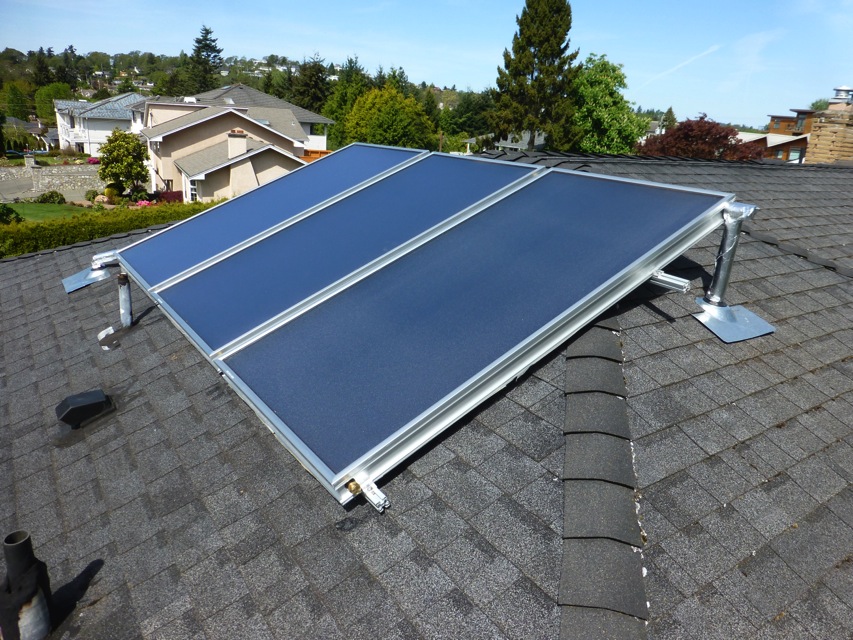
Solar drying replaces fuel or grid power with heated air from solar collectors, and it works when the dryer is sized from the water that must be removed. This guide covers dryer types, how an air collector feeds a drying chamber, a sizing method and what test data says about passive and active designs.
Short answer: Solar drying uses sunlight, usually through an air collector, to heat air that flows over crops or products and carries moisture away. The main designs are direct, indirect and mixed-mode dryers, each either passive (natural convection) or active (fan-driven). It suits low-temperature drying with cheap sunshine, and it needs a collector area sized from the water to be removed, plus backup heat if drying must continue in poor weather.
Key Takeaways
- Open-sun drying is cheap but depends on weather and gives slow, inconsistent results, while fuel and electric dryers are costly to run.
- Evaporating 1 litre of water takes about 2.4 MJ, and most dryers run below 50% efficiency, so heat demand is large.
- In one ivy gourd study, safe moisture was reached in 7 hours in an active solar dryer, 9 hours in a passive one and 11 hours in open sun.
- Size collector area as heat needed divided by daily collector yield and the number of drying days, then check it against site data.
- The IEA reports that solar air heaters in agriculture are primarily used for low-temperature drying, and that most solar air systems have no heat storage.
Why Use Solar Drying Instead of Open-Sun or Fuel Drying?
Solar drying keeps the low cost of sunshine while fixing the weaknesses of open-sun drying. The National Center for Appropriate Technology (NCAT) explains in Solar Thermal Energy that sun drying is inexpensive and simple but depends on weather and sunshine hours, can give inconsistent or low-quality results, is slow and exposes crops to pests.
Fuel and electric dryers fix those problems but are expensive to run. NCAT states that it takes 2.4 megajoules of energy to evaporate 1 litre of water and that most dryers operate at less than 50% efficiency, so they need large energy inputs. That fuel bill is why solar crop dryers have drawn attention, especially where fuel is costly or the grid is weak.
Drying also protects food that would otherwise spoil. A 2023 review of solar dryer performance notes that drying reduces the moisture content of harvested crops, which helps prevent spoilage and microbial growth, and it cites the Food and Agriculture Organization of the United Nations on the loss or waste of about one-third of the world’s food supply.
What Types of Solar Dryers Exist?
Solar dryers fall into three families: direct, indirect and mixed-mode, and each can be passive or active. NCAT describes passive dryers as natural-convection designs and active dryers as powered-airflow designs. All of them have a solar collector that turns sunlight into heat and a drying chamber where product is spread in a thin layer.
| Type | How it works | Best for | Limit |
|---|---|---|---|
| Direct (greenhouse or tunnel) | Product sits on screened trays inside a greenhouse or high tunnel, in the sun, with natural or fan ventilation | Simple, low-cost drying of crops such as coffee beans | Product is exposed to sunlight, and control is limited |
| Indirect | A separate insulated collector heats air that passes through a drying chamber, so the product stays out of the sun | Products that must not be sun-exposed, and tighter control of temperature and airflow | Needs ducting, and passive versions are slower |
| Mixed-mode | Combines a collector with direct solar gain in the drying chamber | Faster drying with moderate complexity | More design effort than a direct dryer |
| Hybrid (with backup heat) | Solar dryer plus an auxiliary heat source or heat storage | Drying that must continue in cloud, at night or on a fixed schedule | Higher cost and a second energy source to manage |
The NCAT paper describes a basic indirect dryer as an insulated box with a glass window, a dark absorbing surface, an air inlet and a higher outlet through which hot air rises out. It also describes a variation with a fan and a drying chamber separate from the collector. The 2023 review cites earlier work finding that forced-convection (active) dryers are generally more effective and controllable than natural-circulation (passive) ones, and that the ventilated greenhouse dryer is cost-effective and simple to build for large-scale rural use.

How Does a Solar Air Collector Dryer Work?
A solar air collector dryer works by heating air in the collector and pushing it through a chamber where warm, unsaturated air picks up moisture from the product. The collector absorbs sunlight and turns it into heat. The heated air then passes over or through thin layers of product, takes up water vapour and leaves through an outlet, carrying the moisture out of the chamber.
Airflow does as much work as temperature. The 2023 review explains that air movement removes moisture-laden air from the drying environment, which allows faster drying, and that drying rate rises with air speed in the studies it reviews. This is why an active, fan-driven dryer often outperforms a passive one of the same collector area.
Air collectors suit this job because the heat-transfer medium is already the drying air. The IEA Solar Heating and Cooling Programme states in Solar Heat Worldwide 2025 that solar air heaters in agriculture are primarily for drying applications requiring low temperatures. It also reports 842 MWth (1.20 million m²) of glazed and unglazed air collectors installed worldwide by the end of 2023, and notes that most solar air systems include no heat storage so as to minimise cost. Our guide to solar air heaters covers collector types in more detail.
How Much Collector Area Does a Dryer Need?
Collector area equals the heat needed for the batch, divided by the collector’s daily yield and the number of drying days. The heat needed comes from the water to be removed: multiply its mass by NCAT’s 2.4 MJ per litre, then divide by dryer efficiency. The table works through an illustrative batch, and every assumption is labelled so you can replace it with project data.
| Step | Calculation | Illustrative value |
|---|---|---|
| 1. Batch and moisture | Assumed 1,000 kg of fresh product at 80% moisture, dried to 10% moisture (wet basis) | 200 kg dry matter remains |
| 2. Final mass | 200 kg ÷ (1 − 0.10) | about 222 kg |
| 3. Water to remove | 1,000 kg − 222 kg | about 778 kg (778 litres) |
| 4. Theoretical heat | 778 litres × 2.4 MJ ÷ 3.6 MJ per kWh | about 519 kWh |
| 5. Heat from collectors | 519 kWh ÷ assumed 30% dryer efficiency (NCAT says most dryers are below 50%) | about 1,729 kWh |
| 6. Collector area | 1,729 kWh ÷ (assumed 2.0 kWh/m² per day × 3 drying days) | about 288 m² |
The example is a method, not a design. The 80% and 10% moisture contents, the 30% dryer efficiency and the 2.0 kWh/m² daily yield are our assumptions for illustration. Real values depend on the crop, the air temperature the product tolerates, the site’s solar radiation and the collector’s performance. Use measured local irradiation and ask the collector supplier for yield data at your operating temperature, then add a margin for cloudy days or plan backup heat.
Two practical rules follow. A longer drying schedule needs less collector area per day but more storage capacity for wet product, and a faster schedule needs more area and more airflow. Check the airflow requirement of the product separately, because insufficient airflow stops the chamber from clearing moisture however much heat the collectors supply.
How Do Passive and Active Dryers Compare in Tests?
In the one study with a direct comparison, an active solar dryer dried faster than a passive one, and both beat open-sun drying. The 2023 review describes an experiment on ivy gourd in which safe moisture content was reached in 9 hours in the passive solar dryer, 7 hours in the active dryer and 11 hours in traditional sun drying. In another study on the same crop, the natural-convection indirect dryer had an average collector efficiency of 62.56% and the forced-convection one 77.2%.
Treat those numbers as examples, not specifications. Each comes from one crop in one set of conditions, and the review also cautions that active dryers need electricity or fuel for fans and auxiliary heat, which raises capital, maintenance and operating cost and makes them unsuitable for remote village use in many developing countries. For a project, test the exact crop at the exact temperature, and decide whether the site can support a fan.
What Operating Details Protect Product Quality?
Thin product layers, controlled airflow and condensation management protect quality more than extra collector area. NCAT lists a few practices:
- Spread product in a thin layer so heated air reaches all of it.
- Clean the drying chamber and remove condensation regularly to avoid mould.
- Use a fan, solar-powered if needed, to lessen condensation and increase dehydration.
- Dry grain to a safe moisture level before storage, because high moisture in stored grain leads to spoilage and mould-related aflatoxins that can harm animals and people.
NCAT also covers grain, where forced air is blown through bins and a heater supplies backup when solar heat is not enough. The same logic applies to any solar dryer that must meet a harvest deadline: plan for backup heat or storage so that weather does not set the schedule.

Where Does Solar Drying Work at Industrial Scale?
Solar drying works at industrial scale when the process needs low-temperature heat for many hours and fuel is expensive, and larger systems add storage or concentrating collectors. The IEA counts agricultural applications, including solar thermal systems used for drying wood chips, crops and fruits, as a category of solar heat for industrial processes.
The IEA report describes a tea-drying plant in Kenya as a recent example. In 2024, Absolicon installed a 180 kW concentrating solar thermal field with a thermal storage unit of more than 1 MWh at Chelal Tea Factory, in Kenya’s largest tea district. The report says tea drying otherwise burns large amounts of firewood and calls it the world’s first plant to use concentrating solar collectors and thermal storage to dry tea. For lower temperatures and simpler products, an air collector field with a fan, as described above, is the lower-cost route. Our guide to solar greenhouse heating covers a related farm application.
How Millionsun Supports Solar Dryer Projects
Millionsun supplies collectors and components to EPC contractors and system builders, and each project’s airflow, temperature and area are specified with the customer. The company has manufactured flat plate collectors in Dongguan, China since 2006 and supplies complete units, SKD, CKD or components, with OEM options for logo, labels, packaging, coating colour and size. See the air collector page for the current model, and ask for the specification that matches your airflow and temperature before you size the field.
For builders that make their own air or liquid collectors, the absorber range and the local manufacturer programme cover CKD supply. Our EPC and project developer page explains how project supply and documentation work.
Planning a solar dryer project?
Millionsun is a source factory in Dongguan, China, producing flat plate collectors, absorbers, solar water tanks and system accessories since 2006. We supply complete units, SKD, CKD or components, with OEM and ODM options. Send us your product, batch size, target temperature and site, and we will suggest a collector configuration and quote.
Request a QuoteFrequently Asked Questions
What is solar drying?
Solar drying is the removal of moisture from crops or products using heat from sunlight, usually by heating air in a collector and passing it over the product. NCAT describes it as dehydrating food crops and grains using solar energy, and notes that it is an environmentally friendly and energy-efficient technique for preserving agricultural products.
How does a solar dryer work?
A solar dryer works by collecting sunlight as heat, warming air, and moving that air through a chamber where it absorbs moisture from thin layers of product. In passive dryers the warm air rises by natural convection, and in active dryers a fan drives the flow. The humid air leaves through an outlet at a higher point.
What is the difference between direct and indirect solar dryers?
Direct solar dryers expose the product to sunlight inside a greenhouse or tunnel, while indirect dryers heat air in a separate collector and keep the product out of the sun. Mixed-mode dryers combine both. Indirect designs give better control of temperature and airflow, and direct designs are simpler and cheaper to build.
How do I size the collector area for a dryer?
Size collector area by dividing the heat needed to evaporate the batch’s water by the collector’s daily yield and the number of drying days. Allow about 2.4 MJ per litre of water, divide by realistic dryer efficiency, use measured local sunshine and add backup or margin for cloudy days. The worked table above shows the steps.
Does a solar dryer need electricity or backup heat?
A solar dryer needs electricity only if it is active, since passive dryers run by natural convection, and it needs backup heat only if drying must continue in poor weather or at night. Active dryers need power for fans, and the 2023 review notes that this raises cost and limits use at remote sites. Plan backup heat for deadline-critical crops.
Bottom Line
- Solar drying fixes the weather and quality problems of open-sun drying without the fuel bill of conventional dryers.
- Evaporating a litre of water takes about 2.4 MJ, so size the collector field from the water to be removed.
- Active dryers dry faster than passive ones but need power, and both beat open sun in the study cited here.
- Thin layers, airflow and condensation control protect quality.
- Plan backup heat or storage for products that cannot wait for good weather.