 跳至内容

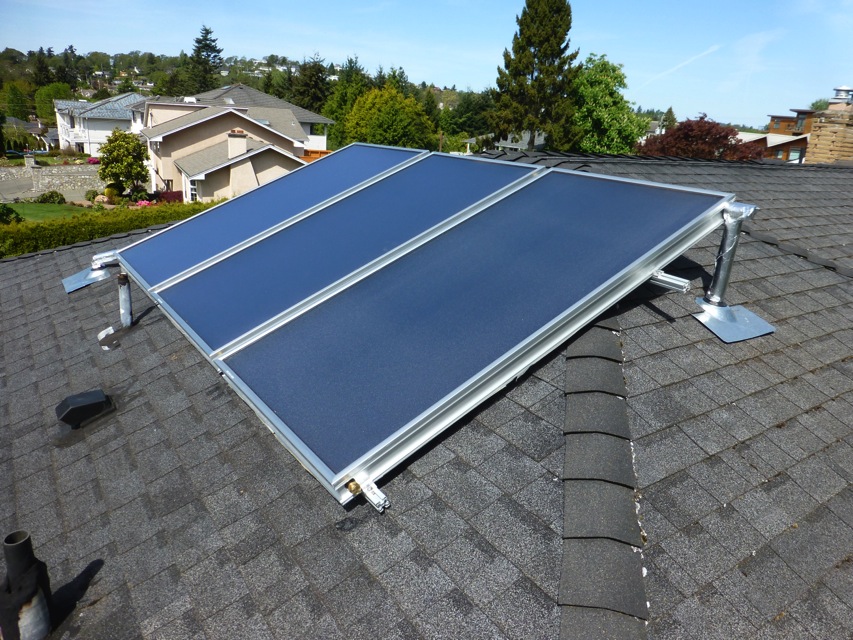
A solar air heater warms air directly from sunlight with a collector and a fan, with no water, no freezing risk and no storage tank. This guide explains how the main types work, where they save money, and how to size a system from airflow and temperature rise.
Short answer: A solar air heater is a collector that heats air instead of water: sunlight warms a dark absorber, a fan moves air across or through it, and the warmed air goes into a building or a drying chamber. It suits buildings with high ventilation loads and daytime heat demand, such as workshops, warehouses, farm buildings and crop dryers. It needs no antifreeze and no storage tank, but it only delivers heat while the sun shines, so it supplements the existing heating system instead of replacing it.
Key Takeaways
- Solar air collectors come as glazed flat plate units that recirculate room air and unglazed transpired collectors that preheat outside ventilation air.
- Air systems have no freezing or boiling-water risk and need no heat exchanger, but they deliver heat only in daylight.
- A documented U.S. federal installation saved about 26% of its ventilation-air heating energy with a simple payback of nine years.
- Size a system from airflow and the temperature rise you want, then check the answer against the collector’s rated output per square metre.
How Does a Solar Air Heater Work?
A solar air heater works by passing air over a sun-heated absorber and then blowing the warmed air to where it is needed. The U.S. Department of Energy’s Solar Vision Study explains that the most common air-based systems for homes use flat-plate air heating collectors on the roof or a south-facing wall, with fans blowing air from a room into the collector and back into the room.
A glazed air collector has the same layers as a water collector, with air channels in place of water tubes:
- Cover: low-iron glass or polycarbonate that lets sunlight in and holds heat.
- Absorber: a dark metal plate or screen that turns sunlight into heat; air flows behind it, across it or through it.
- Insulation and frame: back insulation that cuts heat loss and a frame that carries the load.
- Fan and controls: a fan, often with a thermostat and a damper, that runs only when the air in the collector is hot enough.
Because the heat-transfer fluid is air, a solar air heater has no freeze protection, no glycol, no heat exchanger and no pressurised piping. The trade-off is that air carries much less heat per cubic metre than water, so air ducts and fans are larger than water pipes and pumps. Our guide to active and passive solar heating explains where air systems sit in the wider picture.
What Types of Solar Air Collectors Exist?
The three main types are glazed recirculating collectors, unglazed transpired collectors and natural-convection (thermosyphon) units. The Solar Vision Study describes transpired collectors as an unglazed application of flat-plate collectors that preheat the air passing through perforations into a ventilation system, and notes that they work best with high ventilation loads, so they are generally used in larger non-residential spaces.
| Type | How it works | Best for | Limit |
|---|---|---|---|
| Glazed recirculating | Fan draws room air through a glazed collector and returns it warm | Space heating of houses, workshops and farm buildings | Heats only while the sun shines; needs ducting into the room |
| Unglazed transpired | Fan pulls outside air through a perforated dark wall and into the ventilation system | Ventilation preheating in factories, warehouses and large buildings | Needs a high, steady ventilation load and a sunny south wall |
| Thermosyphon (no fan) | Warm air rises through the collector by natural convection | Small rooms and simple DIY heaters | Low output; needs one-way dampers to stop night reverse flow |
| Glazed, for drying | Fan blows heated air through a crop or product | Crop and product drying | Needs enough airflow and a way to run during the drying season |
How Much Heat and Money Does a Solar Air Heater Save?
A well-documented example is the transpired collector installed in 1990 on the National Renewable Energy Laboratory’s Waste Handling Facility, which saved about 26% of the energy needed to heat that building’s ventilation air. The U.S. Department of Energy’s Federal Energy Management Program case study lists these figures:
- System: a 300 ft² black corrugated aluminium collector with 2% porosity, a bypass damper and a two-speed supply fan.
- Output: about 125 Btu/hr/ft² (400 W/m²) of heat delivery in full sun.
- Savings: 14,310 kWh a year, replacing electric resistance heating.
- Economics: at $20/ft² installed cost (2005) and $0.054/kWh electricity, a nine-year simple payback.
- Life: a 25-year original life expectancy, with NREL expecting longer.
That payback reflects cheap electricity and a small, steady load; a facility with higher fuel prices, longer heating seasons or more ventilation air would pay back faster, and one with the opposite would pay back slower. Treat the case study as a method to copy, not a number to promise a customer.
Where Do Solar Air Heaters Pay Off?
Solar air heaters pay off where heat is needed in daylight, the air volume is large and the existing heat comes from an expensive fuel. The Solar Vision Study lists emerging agricultural uses such as heating greenhouses, drying crops and space heating for farm buildings, and cites a Costa Rican coffee cooperative that uses 850 m² of glazed, roof-mounted flat plate collectors to warm the air its fans blow through coffee beans.
- Ventilation preheating: factories, warehouses, workshops and large halls with a high fresh-air requirement.
- Crop and product drying: coffee, grain, fruit and timber, where warm dry air removes moisture.
- Greenhouses and farm buildings: daytime heat and dehumidification; see our guide to solar greenhouse heating.
- Houses and cabins: a supplemental heater for rooms that are used in the day.
Air systems are a poor fit where heat is needed mainly at night, where the building has little ventilation load, or where no south-facing surface or roof area is available.
How Do You Size a Solar Air Heater?
Size a solar air heater from the airflow you want to heat and the temperature rise you want to achieve, then divide the heat requirement by the collector’s rated output per square metre. The physics is simple: heating air by 1 K needs about 0.33 W per cubic metre of air per hour, so a system’s heat output in watts is roughly 0.33 × airflow in m³/h × temperature rise in K.
- Set the airflow. Use the ventilation rate required for the building, or the airflow a drying process needs.
- Choose the temperature rise. Take the difference between the target supply temperature and the outside air in the design month.
- Calculate the heat. Heat output (W) ≈ 0.33 × airflow (m³/h) × temperature rise (K).
- Divide by collector output. Use the supplier’s tested output per m² at your climate’s irradiance, not the full-sun peak.
- Add the fan and controls. Check duct size, fan pressure and the bypass or shutoff damper for summer.
An illustrative example uses assumed numbers, not market data: heating 3,000 m³/h of ventilation air by 12 K needs about 0.33 × 3,000 × 12 = 11,900 W. If a collector delivers 400 W/m² in full sun, that is about 30 m² of collector at peak output, and the real area depends on how much cloud and cold the site sees. Always confirm output with a tested figure from the collector supplier.
What Are the Limits and Design Pitfalls?
The main limits of solar air heating are daylight-only output, low heat capacity of air and the need for controls that stop the system from overheating or wasting heat. Plan for these four pitfalls:
- No night heat: without a rock bed or other storage, output stops at sunset.
- Reverse flow: a fan-less collector can pull heat out of the room at night unless dampers close.
- Summer overheating: a bypass or shutoff damper and a thermostat stop unwanted heat in warm months. The FEMP case study uses a bypass damper so solar-heated air is supplied only when heating is needed.
- Duct losses: long, uninsulated ducts waste the heat the collector has gained.
How Millionsun Supplies Solar Air Collectors
Millionsun is a source factory in Dongguan, Guangdong, producing since 2006 on an 8,000 m² site with more than 80 employees and 6 automated production lines. Collector capacity is 20,000 m² per month, and we supply complete units, SKD, CKD or components, with OEM and ODM options and a reply within 24 hours.
We make a solar air collector for ventilation and space heating. Collector dimensions, output and test data differ by model, so ask us for the current datasheet and a tested output figure for your climate before you size a project. Our EPC and project developer page explains how we support larger projects.
Planning a solar air heating project?
Millionsun is a source factory in Dongguan, China, producing flat plate collectors, solar water tanks, air collectors and complete systems since 2006. We supply complete units, SKD, CKD or components, with OEM and ODM options. Send your airflow, climate and heating target and we will reply within 24 hours.
Request a QuoteFrequently Asked Questions
How does a solar air heater work?
A solar air heater works by drawing air through a collector where a sun-heated dark absorber warms it, and a fan then delivers the warm air to a room, a ventilation intake or a dryer. It has no water, so it needs no antifreeze or heat exchanger.
How much does a solar air heater save?
A solar air heater typically saves a fraction of the heating energy, not all of it, because it works only in daylight. A U.S. federal case study of a transpired collector reported savings of about 26% of the energy needed to heat the building’s ventilation air.
Can a solar air heater replace a furnace?
No, a solar air heater should supplement a furnace or other heater, not replace it, because it gives no heat at night or on very cloudy days. It is best used to cut fuel use during sunny hours.
What is a transpired solar collector?
A transpired solar collector is an unglazed, perforated dark metal wall on the south side of a building that preheats the fresh air a fan pulls through it. It works best on buildings with high ventilation loads such as factories and warehouses.
Bottom Line
- Use glazed air collectors for space heating and drying, and transpired collectors for ventilation preheating.
- Size from airflow and temperature rise, and confirm output with a tested figure for your climate.
- Add dampers and controls, and treat the system as a fuel saver, not a full heating replacement.