 跳至内容

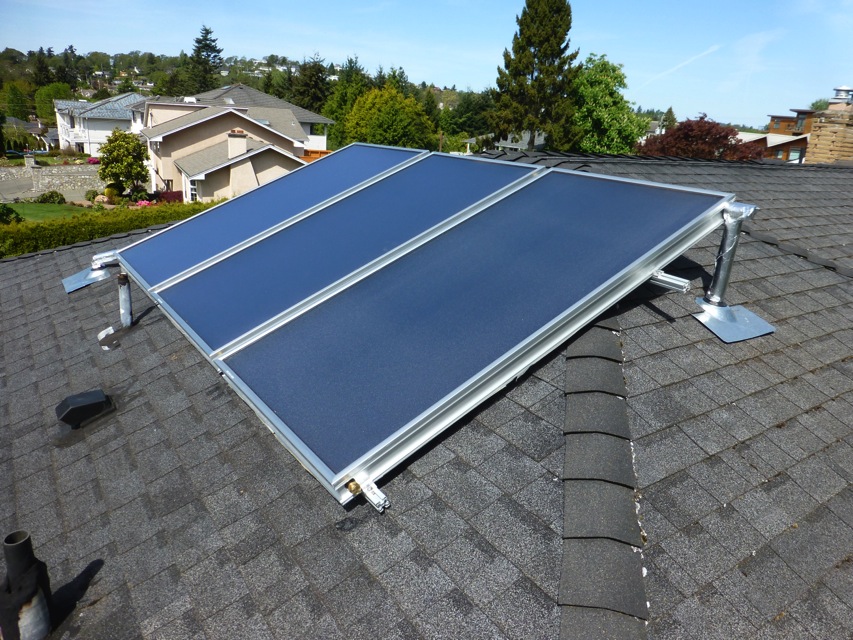
Solar heating covers everything from a south-facing window to a pumped collector field, and the words active and passive are used loosely. This guide defines both, shows what each does for water and space heating, and sets out when to specify which.
Short answer: Passive solar heating collects and stores heat through building design or natural convection with no pumps or fans, while active solar heating uses pumps or fans to move heat from a collector to where it is used or stored. Passive systems cost less and have fewer parts to fail, but they depend on climate, orientation and layout. Active systems cost more and need maintenance, but they give control over where the heat goes and work in more climates. Many projects combine the two.
Key Takeaways
- Passive means no moving parts for heat transfer: windows, thermal mass or natural circulation do the work.
- Active means pumps or fans move liquid or air between a collector and a store or a room.
- Both terms apply to space heating and to water heating, and a thermosyphon water heater is passive while a split system is active.
- The deciding factors are climate, freezing risk, load size and who will maintain the system.
What Is Solar Heating?
Solar heating is the use of sunlight as heat for water, air or building spaces, rather than converting it to electricity. The U.S. Energy Information Administration separates passive solar heating, where the sun shines through windows and warms the building interior, from active systems that use fans or pumps to move air or liquid through collectors.
Solar heating covers four common applications, each with its own collector and temperature range:
- Domestic and commercial hot water: glazed flat plate or evacuated tube collectors with a storage tank.
- Swimming pool heating: low-temperature collectors that run near air temperature.
- Space heating: hydronic floor or radiator loops, or air collectors that feed warm air into rooms.
- Process and drying heat: larger collector fields for laundries, food plants and crop drying.
How Does Passive Solar Heating Work?
Passive solar heating works by letting sunlight in, storing it in heavy materials, and releasing it later, all without mechanical parts. The EIA describes passive designs as typically having large south-facing windows in the Northern Hemisphere and thermal mass in walls or floors that absorbs and releases heat, with overhangs or shades to keep the building cool in summer.
Passive principles also apply to water heating. The U.S. Department of Energy’s Federal Technology Alert on solar water heating says passive systems need no pumps or electronic controls, which greatly simplifies operation and maintenance, and that they are the most commonly used type in climates with modest freeze threat. It adds that, because they usually store water outside at or near the collector, they lose more heat, especially in cold climates. The two common passive water heaters are integral collector storage (ICS) and thermosyphon systems; the DOE’s Solar Vision Study calls ICS the least expensive, simplest and most reliable type but vulnerable to freezing. Our guide to thermosyphon solar water heater design covers the thermosyphon type in detail.
Passive heating has two clear strengths and two clear limits:
- Strength: no pump, fan or controller to fail, and no running electricity.
- Strength: low added cost when the layout is planned from the start.
- Limit: output follows the sun and the building design, with little control.
- Limit: overheating in hot climates and weak winter output in cold ones.
How Does Active Solar Heating Work?
Active solar heating works by circulating a fluid or air through a collector with a pump or fan, then delivering the heat to a tank or a room. The EIA notes that active solar water heating systems usually have a tank for storing solar-heated water, and that air heating uses fans to move air through flat plate collectors into buildings.
Active water heaters come in two forms. A direct system pumps potable water through the collector, and an indirect system pumps a non-freezing heat-transfer fluid through a heat exchanger in the tank. For freezing climates, the DOE’s Federal Technology Alert describes two routes: antifreeze systems that circulate a non-toxic fluid, usually propylene glycol, and drainback systems that drain the collector loop whenever the pump is off. Our guide to split solar hot water systems sets out the components and controls.
Active space heating uses temperature to choose the collector. The Solar Vision Study says flat plate collectors suit radiant-floor systems because they perform well at liquid temperatures of 120–140 °F, while baseboard or radiator systems at 160–180 °F use larger radiator areas or higher-temperature evacuated-tube collectors.

Active vs Passive Solar Heating: How Do They Compare?
Active and passive solar heating differ in cost, control, climate range and maintenance, as the table shows.
| Factor | Passive | Active |
|---|---|---|
| Heat movement | Windows, thermal mass, natural convection | Pump or fan |
| Upfront cost | Lower | Higher |
| Control | Limited | High, with controller and sensors |
| Maintenance | Minimal | Pump, controller, valves, fluid |
| Climate range | Mild and frost-free for water heating | Wider, including freezing climates with indirect loops |
| Tank location | Above the collector | Anywhere, including indoors |
| Typical examples | South-facing glazing, thermosyphon water heater | Split water heater, hydronic space heating, air collector with a fan |
Which Should You Specify for a Project?
Specify passive heating where the climate is mild and the load is small, and specify active heating where freezing, large loads or indoor storage rule out a passive layout. Apply this checklist before you decide:
- Check freezing risk. Frost on the roof usually rules out direct passive water heaters.
- Size the load. A single house suits a thermosyphon unit, while a hotel or school needs a pumped collector field and a large tank.
- Decide where the tank goes. An indoor or concealed tank needs an active split system.
- Check who maintains it. A market without solar installers favours the passive unit.
- Plan a backup. The U.S. Department of Energy’s building science pages note that conventional water heaters often provide the backup.
Solar air heating is a separate active option for buildings and drying. Our solar air collector heats air for ventilation or space heating.

How Millionsun Supplies Both Types
Millionsun is a source factory in Dongguan, Guangdong, producing since 2006 on an 8,000 m² site with more than 80 employees and 6 automated production lines. Collector capacity is 20,000 m² per month, tank capacity is 4,000 units per month, and every collector and tank is 100% pressure tested before shipment.
The passive range is the thermosyphon system and the active range is the split system. Both are supplied as complete units, SKD, CKD or components, with OEM and ODM options and a reply within 24 hours.
Need a passive or active system for your market?
Millionsun is a source factory in Dongguan, China, producing flat plate collectors, solar water tanks and complete systems since 2006. We supply complete units, SKD, CKD or components, with OEM and ODM options. Send your climate and project size and we will reply within 24 hours.
Request a QuoteFrequently Asked Questions
What is the difference between active and passive solar heating?
The difference between active and passive solar heating is that active systems use pumps or fans to move heat, while passive systems rely on building design or natural convection. Active systems cost more and give more control.
Is a thermosyphon water heater active or passive?
A thermosyphon water heater is a passive solar heating system, because heated water rises into the tank by natural convection with no pump. A split system with a separate tank and pump is active.
Do active solar heating systems work in cold climates?
Active solar heating systems work in cold climates when they use an indirect loop with antifreeze or a drainback design. Direct systems that pump potable water through the collector are for climates where freezing is rare.
Can I combine active and passive solar heating?
Yes, you can combine active and passive solar heating, and many buildings do so. Passive design lowers the heating demand, and an active system covers hot water or the remaining heat load.
Bottom Line
- Passive heating is cheaper and simpler but limited by climate and layout.
- Active heating adds control, indoor storage and freezing protection at a higher cost.
- Choose by freezing risk, load size, tank location and local maintenance skills.