 跳至内容

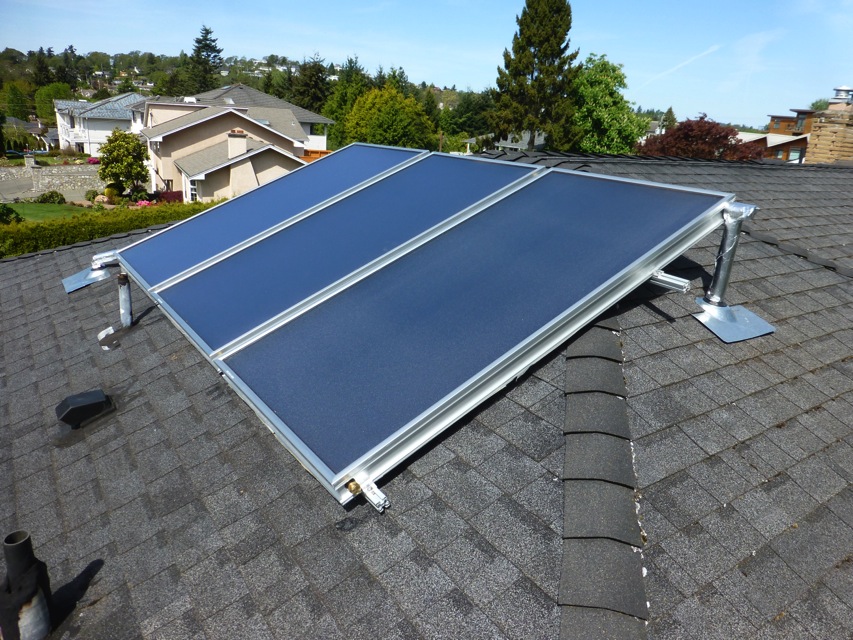
Solar thermal collectors turn sunlight into heat and photovoltaic panels turn it into electricity, so the better choice depends on what the building actually needs. This guide compares the two for hot water projects and shows when to specify each, or both.
Short answer: Solar thermal is the better technology when the goal is hot water, because a flat plate collector converts a much larger share of sunlight into useful heat than a PV panel converts into electricity. Photovoltaic is the better technology when the building needs electricity for many loads, or when the market has no culture of installing hot water plumbing. For most hot water projects the decision comes down to hot water demand, roof area, local energy prices and who will service the system.
Key Takeaways
- Solar thermal makes heat and PV makes electricity, so the two are not interchangeable on the same roof.
- Per square metre of roof, a thermal collector usually delivers more useful energy for water heating than PV; PV delivers energy that can run anything.
- Thermal needs plumbing, storage and a backup heater; PV needs an inverter and, for hot water, an electric element or heat pump.
- Compare the two on cost per useful kWh of hot water and on local fuel and electricity prices, not on panel efficiency alone.
What Is the Difference Between Solar Thermal and Photovoltaic?
Solar thermal collectors absorb sunlight as heat and move that heat into water or air, while photovoltaic panels convert sunlight directly into electricity. The U.S. Department of Energy’s Solar Vision Study puts it plainly: unlike PV and concentrating solar power, solar heating and cooling technologies produce thermal energy, not electricity.
A typical solar water heating system has four parts:
- Collector: a flat plate or evacuated tube collector that absorbs sunlight; see our guide to flat plate and evacuated tube collectors.
- Storage tank: an insulated tank that holds the heat until the household or building needs it.
- Circulation: natural convection in a thermosyphon system, or a pump and controller in a split system.
- Backup: an electric element, gas heater or heat pump for cloudy days and peak demand.
A PV system for the same job has a different list: panels, an inverter, wiring, and a load that turns electricity into hot water, such as a resistance element in a tank or a heat pump water heater. That load is the part many comparisons leave out.
Which Is More Efficient: Solar Thermal or PV?
Solar thermal converts a larger share of incoming sunlight into useful energy than PV, but the output is heat, so the two figures cannot be compared as if the energy had the same value. The DOE Solar Vision Study gives a typical overall efficiency of 40%–50% for a liquid flat plate collector in its normal operating range.
That number moves with operating temperature. A collector heating water to 45–60 °C for a shower loses little heat to the air, and one heating to 90 °C loses much more. PV efficiency changes with cell temperature and technology, so use the module datasheet and the local irradiation data when you model a real project.
A fair comparison therefore asks what each system saves, not what each panel converts:
- Thermal output replaces whatever fuel heats the water today, whether electricity, gas, LPG or diesel.
- PV output replaces grid electricity at the retail tariff, and can also run lights, pumps and cooling.
- For a hot water load only, divide the installed cost by the useful kWh of hot water each system delivers per year.
The U.S. Department of Energy’s building science education pages say solar water heaters can cut water-heating electricity use by an average of at least 50%, and by much more in sunny regions. Treat that as a benchmark for a properly sized system, and verify it against the project’s own demand profile.

How Do Solar Thermal and PV Compare Side by Side?
The two technologies differ on output, equipment, maintenance and how well they fit a hot water load, as the table summarises.
| Factor | Solar thermal | Solar PV |
|---|---|---|
| Output | Heat for water (and air or space heating) | Electricity for any load |
| Best use | Large, steady hot water demand | Mixed electrical demand; exporting to the grid |
| Roof area for hot water | Smaller | Larger, when used only for water heating |
| Storage | Hot water tank, cheap per kWh | Battery or grid; or a hot water tank used as a thermal battery |
| Key components | Collector, tank, pipework, sometimes pump and controller | Panels, inverter, wiring, electric element or heat pump |
| Freezing | Needs freeze protection in cold climates | Not a freezing issue |
| Maintenance | Water quality, valves, pump, glycol if used | Cleaning, inverter replacement over the system life |
| Installer skills | Plumbing and roofing | Electrical |
Thermal wins on roof area and storage cost for pure hot water duty, and PV wins on flexibility. If a market lacks plumbers who understand solar loops, a thermosyphon system or a PV-driven system may be easier to support than a pumped split system; our guide to thermosyphon and split systems explains the trade-off.
Which Costs Less: Solar Thermal or PV?
Solar thermal usually costs less than PV for a given amount of hot water, but installed prices vary so much by country and system type that you should compare local quotations. A 2026 UK guide from Sunsave cites about £6,000 for a typical household solar thermal system; the same guide describes PV with a battery as a larger outlay that serves the whole house rather than only the hot water.
When you build the comparison, include every cost the system needs:
- Equipment: collectors and tank for thermal; panels and inverter for PV.
- Balance of system: pipework, valves, pump and controller for thermal; mounting, cabling and protection for PV.
- Backup or load: the electric element, gas heater or heat pump that finishes the water heating.
- Installation labour: plumbing and roofing for thermal, electrical for PV.
- Operating life: replacement of the pump and controller, or of the inverter.
When Should You Specify Thermal, PV or Both?
Specify solar thermal when hot water is the dominant load, specify PV when electricity is, and specify both when the roof and the budget allow. Use these cases as a starting point.
- Hotels, hospitals, dormitories and laundries: thermal first, because the hot water load is large and daily; see our guide to solar hot water for hotels.
- Houses in warm, frost-free markets: a thermosyphon system is the lowest-cost route to solar hot water.
- Markets with high grid tariffs and net metering: PV is attractive, and an electric tank or heat pump can use the surplus.
- Limited roof area with both heat and power needs: a hybrid PVT collector delivers heat and electricity from the same area; see the PVT flat plate collector.
- PV-driven hot water: a PV solar water heater uses panels to power the heating element and needs no solar loop.

How Millionsun Supplies Both Technologies
Millionsun is a source factory in Dongguan, Guangdong, producing since 2006 on an 8,000 m² site with more than 80 employees and 6 automated production lines. Collector capacity is 20,000 m² per month, and every collector and tank is 100% pressure tested before shipment.
Our flat plate collectors use low iron patterned tempered glass of 3.2 mm with transmission of at least 92%, and our black and blue absorber coatings have an absorptance of 95% ±2%. We also supply PVT collectors and PV solar water heaters as complete units, SKD, CKD or components, with OEM and ODM options.
Choosing between thermal, PV and PVT for a project?
Millionsun is a source factory in Dongguan, China, producing flat plate collectors, solar water tanks, PVT collectors and complete systems since 2006. We supply complete units, SKD, CKD or components, with OEM and ODM options. Send your climate, load and roof details and we will reply within 24 hours.
Request a QuoteFrequently Asked Questions
Is solar thermal better than solar PV for hot water?
Solar thermal is usually better than solar PV for hot water, because it converts sunlight directly into heat with little equipment and stores that heat cheaply in a tank. PV can still win where the building needs electricity for many other loads or where the market lacks solar plumbing skills.
Can solar PV heat water as well as solar thermal?
Solar PV can heat water through an electric element or a heat pump, but it needs more panel area than a thermal collector for the same hot water output. A heat pump water heater narrows that gap by delivering more heat per unit of electricity.
Can I install solar thermal and solar PV on the same roof?
Yes, solar thermal and solar PV can share a roof, provided the project has enough area and both loads justify the cost. A PVT collector is an alternative when roof area is limited, because it produces heat and electricity from the same surface.
Does solar thermal work in winter?
Solar thermal works in winter at a lower output, and it needs freeze protection wherever temperatures fall below freezing. Cold-climate projects normally use an indirect loop with antifreeze or a drainback design.
Bottom Line
- Use solar thermal where hot water is the main load, and PV where electricity is.
- Compare cost per useful kWh of the output you actually need, using local fuel and tariff data.
- Use PVT or a PV solar water heater when roof area or plumbing skills are the constraint.