 跳至内容

Solar thermal and heat pump water heaters both beat plain electric resistance, and their typical efficiency ranges overlap, so the winner depends on the site. This guide compares how each works, where each fails and how to decide what to stock or specify.
Short answer: A solar water heater wins on sunny sites with an unshaded roof and expensive backup energy, while a heat pump water heater wins where roof space or sun is limited and a warm, roomy indoor location is available. The U.S. Department of Energy gives both a similar efficiency range against electric resistance heating, so site conditions, not a headline number, decide the choice. Both cost more to buy than a conventional heater.
Key Takeaways
- A heat pump water heater moves heat from surrounding air and is two to three times more energy efficient than electric resistance heating, per the U.S. Department of Energy.
- Solar water heating systems commonly reach a Solar Energy Factor of 2 or 3, which gives a similar range of electricity saved, so efficiency alone does not separate them.
- Heat pumps need a 40 °F–90 °F location with at least 1,000 cubic feet of air space, and they do not work efficiently in a cold space.
- Solar systems almost always need a backup heater for cloudy days and peak demand, and cold climates need freeze protection.
- Match the technology to sunlight, roof space, indoor space, electricity price and hot water pattern.
How Does a Heat Pump Water Heater Work?
A heat pump water heater uses electricity to move heat from one place to another instead of generating heat directly. The U.S. Department of Energy explains on its heat pump water heater page that this makes the units two to three times more energy efficient than conventional electric resistance water heaters. A stand-alone air-source unit pulls heat from the surrounding air and transfers it, at a higher temperature, to water in a storage tank, like a refrigerator running in reverse.
Most units are hybrids. ENERGY STAR notes that during periods of high hot water demand, heat pump water heaters switch automatically to standard electric resistance heat, and that control panels offer modes such as efficiency, hybrid and electric-only. The electric-only setting is the least energy-efficient. A heat pump can also be retrofitted to an existing storage water heater.
How Does a Solar Water Heater Work?
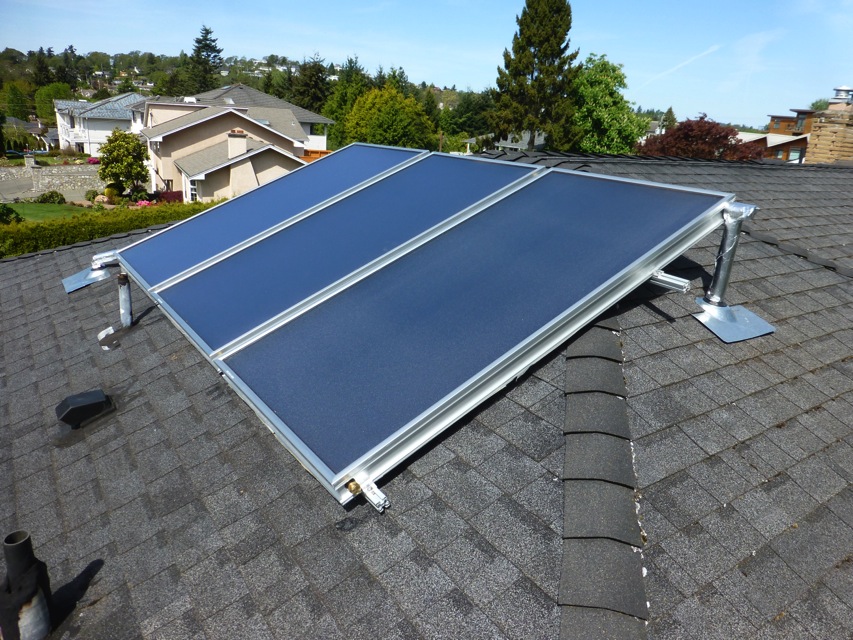
A solar water heater uses collectors to absorb sunlight and a storage tank to hold the heated water. The DOE’s solar water heater overview divides systems into active, with circulating pumps and controls, and passive, without them. Direct systems circulate household water and suit climates that rarely freeze, while indirect systems circulate a non-freezing heat-transfer fluid and are popular where freezing is common.
Solar systems nearly always include a backup. The DOE states that they almost always require a backup system for cloudy days and times of increased demand, usually a conventional storage water heater. The sun does the preheating and the backup tops up. Our guides on how solar water heaters work and system types give the detail.
Solar Water Heater vs Heat Pump: How Do They Compare?
The two technologies differ most in what they need from the site, not in efficiency. The table compares them using DOE statements plus our own reading of what they mean for buyers.
| Factor | Solar water heater | Heat pump water heater |
|---|---|---|
| Energy source | Sunlight collected on the roof | Heat from surrounding air, moved by electricity |
| Typical efficiency (DOE) | Solar Energy Factor of 2 or 3 is most common | Two to three times as efficient as electric resistance |
| Site needs | Sunny, unshaded collector area and a storage tank | Location staying at 40 °F–90 °F (4.4 °C–32.2 °C) all year with at least 1,000 cubic feet (28.3 m³) of air space |
| Cold weather | Needs freeze protection, and a cold climate suits indirect systems | Does not operate efficiently in a cold space because it cools the space it sits in |
| Cloudy weather and peak demand | Almost always needs a backup heater | Hybrid units switch to electric resistance during high demand |
| Upfront cost vs conventional heater | Higher | Higher initial cost, with lower operating cost |
| Side effect | None on the room | Cools the space it sits in, which helps a hot room and hurts a cold one |
The DOE also reports that a heat pump can heat water as a stand-alone system or as part of a combined water-heating and space-conditioning system, and that air-source systems work more efficiently in a warm climate. A heat pump can also provide cooling, which suits buildings that need both.

Which Uses Less Electricity for the Same Hot Water?
With the DOE’s typical efficiency ranges, a solar water heater and a heat pump water heater use about the same electricity for the same hot water load. The table is our own calculation. It takes the DOE benchmark household (12.03 kWh of water heating energy a day, from 64.3 gallons heated from 58 °F to 135 °F), an electric resistance baseline with an efficiency of 1.0, and the efficiency ranges the DOE states for each technology.
| Water heater | Efficiency used (DOE) | Electricity per year for 12.03 kWh/day |
|---|---|---|
| Electric resistance (baseline) | 1.0 | about 4,391 kWh |
| Solar with electric backup | SEF 2.0 to 3.0 | about 2,196 to 1,464 kWh |
| Heat pump water heater | 2 to 3 times resistance | about 2,196 to 1,464 kWh |
The ranges overlap, so a decision based only on the claimed efficiency is a coin toss. Real results depart from the ranges: solar output follows the local solar resource and the collector’s performance, and heat pump efficiency follows the temperature of the air around the unit. The comparison is useful for one reason: it shows that you must check the site, not the brochure.
Which Factors Decide the Choice?
Six site factors decide the choice: sunlight, roof space, indoor space, electricity price, hot water pattern and budget. Work through them in this order.
- Sunlight and shading: a sunny, unshaded roof favours solar. A shaded or small roof removes the main advantage.
- Indoor space and temperature: a heat pump needs a 40 °F–90 °F space with at least 1,000 cubic feet of air. A cold garage or a tiny utility cupboard fails that test.
- Climate: freezing weather needs an indirect, non-freezing fluid loop for solar and a warm location for a heat pump. Neither is automatically better in cold regions.
- Electricity and fuel price: the higher the backup energy price, the faster solar pays back. Our payback guide shows how much price changes the result.
- Hot water pattern: large daytime demand suits solar storage, while demand concentrated at night needs a well-sized tank either way.
- Budget and local incentives: both cost more than a conventional heater, so check incentives and landed prices market by market.
A building that already has PV panels with spare daytime output changes the picture, because a heat pump can use that electricity. Our guide to solar thermal versus photovoltaic water heating explains that case.
Can Solar and a Heat Pump Work Together?
Solar can preheat water for a second heater, and that second heater can be a heat pump if the heater maker approves the arrangement. The DOE describes two-tank layouts in which the solar water heater preheats water before it enters the conventional water heater, and one-tank layouts in which the backup is built into the solar storage tank. The solar tank handles the sunny hours and the second heater covers the rest.
Treat this as a design question for the specific products. Ask the heat pump manufacturer whether the unit accepts preheated inlet water, and ask the solar supplier for the controller and tank arrangement. A combined layout adds cost and complexity, so use it only where energy prices or hot water volume justify it.
What Should Distributors and Project Buyers Stock or Specify?
Stock by market condition: solar where sun and energy prices are high, heat pumps where roofs and sunlight are limited, and both where your customers span both cases. The table is our own interpretation of the factors above, not a DOE ranking.
| Market or project condition | Which usually fits first |
|---|---|
| Strong sun, unshaded roofs, high electricity or fuel price | Solar water heater |
| Apartments with small shared roofs or heavy shading | Heat pump, or a central solar system if roof space is shared |
| Cold climate, heated utility room available | Heat pump, or indirect solar with a backup |
| Remote site with limited grid power | Solar water heater, since backup runs only part of the time |
| Building that needs hot water and cooling together | Heat pump |

The solar side offers several formats. Millionsun supplies thermosiphon systems, split systems and a PV solar water heater that heats a tank electrically from PV panels. Our guide on thermosiphon versus split systems helps choose among them.
How Millionsun Fits Into This Choice
Millionsun is a solar thermal manufacturer, so this guide treats heat pumps as the alternative a buyer may compare against, not as our product. Millionsun has produced flat plate collectors in Dongguan, China since 2006 and supplies complete systems, SKD, CKD or components, with OEM options for logo, labels, packaging, coating colour and size. Distributors who also sell heat pumps can add solar as the sunny-market line.
Our flat plate solar water heater range and tank range cover the common formats. See the distributor and importer page for how supply terms work.
Deciding what to stock for your market?
Millionsun is a source factory in Dongguan, China, producing flat plate collectors, solar water tanks and system accessories since 2006. We supply complete units, SKD, CKD or components, with OEM and ODM options. Tell us your climate, typical roof and hot water load, and we will recommend a solar configuration and quote.
Request a QuoteFrequently Asked Questions
Is a solar water heater or a heat pump cheaper to run?
A solar water heater and a heat pump water heater have similar running costs when both reach the typical efficiency ranges the U.S. Department of Energy gives, because both can cut electricity use to about one-third to one-half of electric resistance heating. The result depends on local sunlight for solar and on air temperature for heat pumps, so compare them with real site data.
Does a heat pump water heater work in cold weather?
A heat pump water heater works poorly in a cold space, because it cools the space it sits in. The DOE says installation locations should stay within 40 °F–90 °F year-round and provide at least 1,000 cubic feet of air space, and that placing the unit where there is excess heat, such as a furnace room, raises efficiency.
Does a solar water heater need a backup heater?
A solar water heater almost always needs a backup heater, according to the U.S. Department of Energy, because cloudy days and peak demand exceed what the collectors supply. The backup is usually a conventional storage heater, or a heater built into the solar storage tank.
Can a solar water heater and a heat pump be combined?
A solar water heater and a heat pump can be combined when the solar tank preheats water for a second heater, provided the heat pump maker approves preheated inlet water. The DOE describes the two-tank layout, but compatibility is a product question, so confirm it with both suppliers.
Which is better for a hotel or apartment building?
Neither technology is better in every building, because roof area, hot water pattern and indoor space decide the answer. Large shared roofs and high energy prices favour central solar, while shaded or roof-limited buildings favour heat pumps. Size both options against measured load before specifying.
Bottom Line
- Heat pumps move heat from air, solar collects it from the sun, and both beat electric resistance heating.
- The DOE’s typical efficiency ranges overlap, so decide on site conditions, not brochure figures.
- Solar needs sun, roof space and a backup, and cold climates need freeze protection.
- Heat pumps need a 40 °F–90 °F location with 1,000 cubic feet of air and do poorly in cold spaces.
- Stock solar for sunny, high-price markets and heat pumps for roof-limited ones, or offer both.