 跳至内容

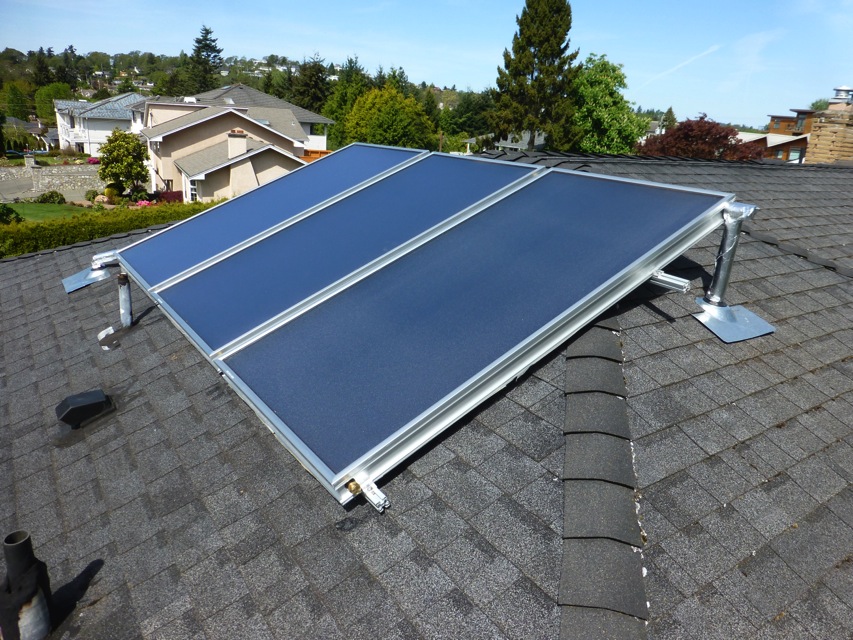
A solar thermal collector is the part that turns sunlight into usable heat, and the type you choose decides operating temperature, freeze risk, certification path and price. This guide compares the main collector types, explains how to read an efficiency curve and gives a selection checklist for buyers.
Short answer: A solar thermal collector absorbs sunlight and passes the heat to water, a water-glycol mix or air, while a PV panel makes electricity. The main types are unglazed, glazed flat plate, integral collector-storage, evacuated tube and air collectors. Choose by operating temperature, climate and local standards. Evacuated tubes lead global new installations, while flat plate collectors dominate Europe and are gaining share worldwide.
Key Takeaways
- The U.S. Department of Energy lists three residential collector types: flat plate (glazed or unglazed), integral collector-storage and evacuated tube.
- In 2023, evacuated tubes were 61% of newly installed collector capacity worldwide and flat plate collectors 32%, but flat plate collectors were 71% of Europe’s installations.
- Collector efficiency falls as the collector gets hotter than the outside air, so compare curves at your system’s operating temperature, not at a headline peak.
- Ask every supplier for an ISO 9806 test report, the stagnation temperature and the certificate that your market recognises.
What Is a Solar Thermal Collector and How Does It Differ From a PV Panel?
A solar thermal collector is a device that absorbs sunlight and transfers the heat to a fluid, usually water, a water-glycol mix or air. A PV panel does a different job: it turns sunlight into electricity. Collectors suit loads that need heat, such as hot water, pool heating, space heating and low-temperature process heat. Our comparison of solar thermal and photovoltaic water heating covers when each wins.
A collector is one part of a system. The U.S. Department of Energy explains that solar water heating systems include storage tanks and solar collectors, and that they are either active, with circulating pumps and controls, or passive, without them. The tank, pipework, controller and backup heater affect results as much as the collector does.
The technology is mature and large. The IEA Solar Heating and Cooling Programme reports in Solar Heat Worldwide 2025 that the global capacity of glazed and unglazed water collectors grew from 62 GWth in 2000 to 544 GWth (777 million m²) in 2024, and that 126 million solar thermal systems were in operation at the end of 2023.
Which Types of Solar Thermal Collectors Are in Use?
Five collector families cover almost all commercial demand: unglazed, glazed flat plate, integral collector-storage, evacuated tube and air collectors. The DOE describes the first four for water heating, and the IEA report tracks air collectors as a fifth family. The table summarises how each is built and where it fits.
| Type | Construction | Typical use | Main limit |
|---|---|---|---|
| Unglazed flat plate | Dark metal or polymer absorber with no cover or enclosure | Swimming pool heating | No cover, so it loses heat quickly and suits only low temperatures |
| Glazed flat plate | Insulated, weatherproofed box with a dark absorber plate under glass or polymer cover | Domestic hot water, commercial hot water, space heating | More heat loss than evacuated tubes at high operating temperatures |
| Integral collector-storage (ICS, batch) | One or more black tanks or tubes inside an insulated, glazed box | Simple preheating in mild climates | Outdoor pipes can freeze, so use only in mild-freeze climates |
| Evacuated tube | Parallel rows of glass tubes, each with a metal absorber tube attached to a coated fin | Higher-temperature and commercial applications, cold or cloudy sites | Fragile glass, higher unit cost and a different spare-parts chain |
| Air collector | Glazed or unglazed collector that heats air instead of water | Space heating, ventilation preheating, drying | Delivers heat only while the sun shines, with bulky ducts and fans |
The DOE notes that evacuated-tube collectors are used more frequently for U.S. commercial applications, that unglazed collectors are typically used for solar pool heating, and that integral collector-storage systems should be installed only in mild-freeze climates. The last two columns of the table add our own reading for buyers; they are not DOE wording. Our guide to evacuated tube, flat plate and heat pipe collectors goes deeper on the two main water collectors.

Which Collector Types Do Markets Actually Buy?
Evacuated tubes lead the world only because of China and India; in Europe, flat plate collectors are the clear majority. The IEA reports that in 2023 evacuated tube collectors were 61% of newly installed capacity worldwide, followed by flat plate collectors at 32%. The same report says this split is driven by China, where about 74% of new collectors were evacuated tubes, and India, where the figure was 93%.
| Market (2023 new installations) | Evacuated tube | Flat plate |
|---|---|---|
| World (share of new capacity) | 61% | 32% |
| China | about 74% | not stated in the report |
| India | 93% | not stated in the report |
| Europe | 28% | 71% |
The trend favours flat plate collectors. The IEA reports that the worldwide share of evacuated tubes fell from about 82% in 2011 to 61% in 2023, while flat plate collectors rose from close to 15% to 32%. In Europe, the flat plate share slipped from 81% to 71% while evacuated tubes rose from 16% to 28%.
System style matters as much as collector type. The same report notes that pumped systems made up 62% of newly installed systems in 2022 and thermosiphon systems 38%. For an importer, the practical conclusion is to stock the collector type your installers, standards and incentive schemes already expect. Our guide on solar hot water system types explains the system side.
How Do You Read a Collector Efficiency Curve?
Collector efficiency is not one number: it falls as the collector runs hotter than the outside air, so compare curves at the temperature your system will actually use. A datasheet efficiency quoted at zero temperature difference is the best case and says little about a collector heating a tank to 55 °C on a cool day. A test report shows the whole curve, with an intercept for sunlight-to-heat conversion and loss coefficients that describe how fast the collector sheds heat.
The standard behind those reports is ISO 9806:2017. The IEA SHC Guide to Standard ISO 9806:2017 describes two equivalent performance test methods, steady state testing and quasi-dynamic testing, and notes that the aim of thermal performance testing is to compare different collectors on a common basis. Always check which method and which area (gross, aperture or absorber) the quoted figures use, because efficiency quoted against a smaller area looks higher.
Collector efficiency also differs from system efficiency. The DOE states that certified systems list a Solar Energy Factor and a solar fraction through the Solar Rating and Certification Corporation and that buyers should not choose a system on efficiency alone but also consider size and overall cost. Pumps, piping losses, storage and backup all sit between the collector curve and the hot water a customer receives.
How Do Collectors Handle Freezing and Overheating?
Freeze protection is a system decision, while overheating is mostly a collector design limit. The DOE describes active direct systems that circulate household water and work where it rarely freezes, and active indirect systems that circulate a non-freezing heat-transfer fluid through the collectors, which are popular in climates prone to freezing. Drainback designs, where the collector empties when the pump stops, are another route. The collector must suit whichever method the system uses.
Overheating happens when the sun shines and no heat is drawn off. ISO 9806 defines standard stagnation conditions as irradiance of 1000 W/m² ± 100 W/m², ambient temperature of 30 °C ± 10 °C and air speed below 1 m/s. The IEA guide tells manufacturers to watch the standard stagnation temperature when choosing materials, insulation and heat-transfer fluid.
A buyer can use that value directly. A collector that publishes its maximum idle temperature gives the installer a design limit for pipework, fluid and seals. Millionsun lists a maximum idle temperature of 152 °C for its black and blue flat plate collectors. Compare such figures only when they come from the same test conditions.
Which Tests and Certificates Should You Ask For?
Ask for the certificate your target market recognises, and a full ISO 9806 test report behind it. The usual names are Solar Keymark for Europe, SRCC OG-100 for the United States, AS/NZS 2712 and WaterMark for Australia. Requirements differ by country and by incentive scheme, so confirm them with your installers or regulator first. Our guide to solar collector certification by market explains each scheme.
Millionsun’s flat plate collectors obtained Solar Keymark in 2008, and the company’s certification history lists SRCC OG-100, WaterMark and AS/NZS 2712 in 2011. Certificate numbers and the models each certificate covers are supplied on request, and the certificate page shows the certificate images. Ask for them in writing for the exact model you plan to import.
How Should Importers and OEM Brands Select a Collector?
Select a collector by working backwards from the system’s operating temperature, climate and local standard, then check build quality and supply terms. The table turns that into questions you can send to any manufacturer.
| Criterion | What to ask | Why it matters |
|---|---|---|
| Operating temperature | At what outlet temperature will most of the heat be used? | Sets the choice between flat plate, evacuated tube and air collectors |
| Climate and freeze risk | Which freeze-protection method does the system use? | Rules out ICS and direct systems in cold regions |
| Local standard | Which certificate does your market need, for which model? | Avoids a blocked shipment or a rejected incentive claim |
| Performance data | Full ISO 9806 curve, area basis and test method? | Allows a fair comparison between suppliers |
| Stagnation limit | Maximum idle temperature under standard conditions? | Protects fluid, seals and pipework on idle days |
| Materials | Absorber, glass, frame, seal and insulation specification? | Drives durability and field failures |
| Supply form and spares | Complete, SKD, CKD or components, and spare-part lead time? | Sets landed cost and after-sales speed |
Collectors from different factories look alike in photographs, so insist on the build details. Our quality control checklist lists eight checks to verify before you order, and the flat plate collector buyer’s guide covers the commercial terms.
How Millionsun Builds Flat Plate Collectors
Millionsun is a flat plate collector manufacturer in Dongguan, China, producing since 2006 on an 8,000 m² site with 80+ employees and six automated production lines. Collector capacity is 20,000 m² per month. The factory runs two ultrasonic welding lines and one laser welding line, plus an in-house absorber coating line.
The black and blue selective-coating flat plate collectors use a 6063 aluminium alloy frame, EPDM and silicone seals, 3.2 mm low-iron patterned tempered glass with at least 92% transmission, 30 mm glass wool insulation and a 0.5 mm aluminium back sheet. Absorptivity is 95% ± 2%, working pressure is 12 bar and test pressure is 20 bar. Every collector is pressure tested at 100% and carries a unique serial number tied to batch, production date and QC records.

Supply is flexible: complete collectors, SKD, CKD or individual components, with OEM options for logo, labels, packaging, coating colour, collector size, frame colour and technical documentation. See the flat plate collector range and the absorber range for the product lines, and our guide to CKD, SKD and complete collectors for the trade-offs.
Choosing a collector for your market?
Millionsun is a source factory in Dongguan, China, producing flat plate collectors, solar water tanks and system accessories since 2006. We supply complete units, SKD, CKD or components, with OEM and ODM options. Tell us your climate, target certificate and volume, and we will recommend a collector and quote.
Request a QuoteFrequently Asked Questions
What are the main types of solar thermal collectors?
The main types of solar thermal collectors are unglazed, glazed flat plate, integral collector-storage, evacuated tube and air collectors. The U.S. Department of Energy lists flat plate, integral collector-storage and evacuated tube as the three residential types, and the IEA also tracks air collectors and hybrid PVT collectors.
What is the most efficient type of solar thermal collector?
No collector type is the most efficient at every temperature, because efficiency depends on the gap between collector and outdoor temperature. Unglazed collectors suit low-temperature pool heating, flat plate collectors cover most hot water duty, and evacuated tubes are used more for higher-temperature and commercial work. Compare ISO 9806 curves at your operating temperature.
How hot can a solar thermal collector get?
A collector can reach its stagnation temperature when it is idle in full sun, and that temperature depends on the design. ISO 9806 defines the standard conditions for measuring it. Millionsun lists a maximum idle temperature of 152 °C for its black and blue flat plate collectors.
What is the difference between gross, aperture and absorber area?
Gross area is the outer size of the collector, aperture area is the opening that admits sunlight, and absorber area is the area of the absorbing surface. Efficiency and output figures change with the area they are quoted against, so a fair comparison needs the same area basis for every supplier.
Do I need certification to import solar thermal collectors?
Certification requirements depend on the destination market and on any incentive scheme, so check them before you order. Solar Keymark, SRCC OG-100, AS/NZS 2712 and WaterMark are the common schemes, and each is tied to specific models. Ask the supplier for the certificate and its scope in writing.
Bottom Line
- A solar thermal collector makes heat, and its type decides temperature range, freeze limits and price.
- Evacuated tubes lead globally because of China and India, while flat plate collectors lead Europe and are gaining share.
- Compare efficiency curves at your operating temperature and on the same area basis.
- Ask for the ISO 9806 report, the stagnation temperature and the certificate for the exact model.
- Match the supply form, complete, SKD or CKD, to your local assembly capacity.