 跳至内容
跳至内容 
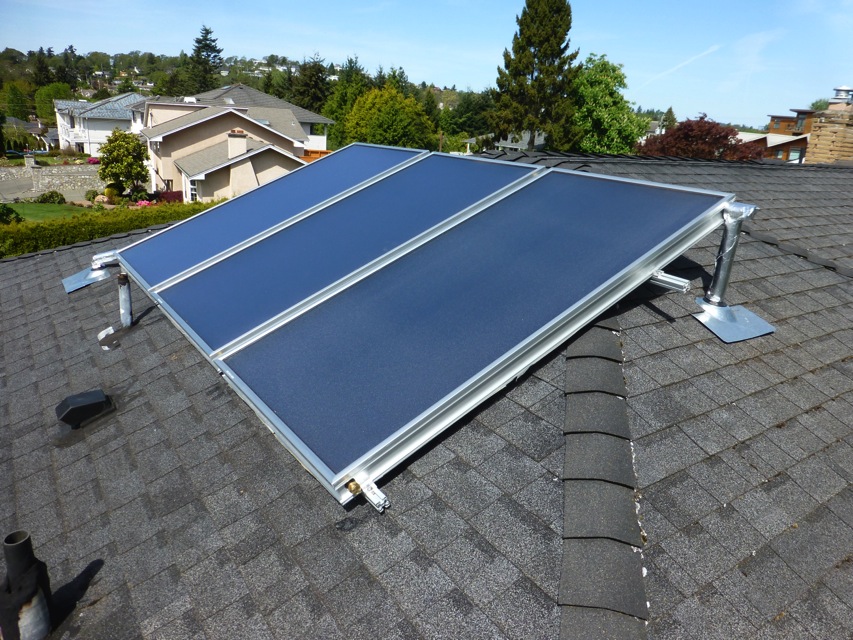
A flat plate collector looks simple: glass, an absorber, a frame. The differences that decide warranty claims and market access are in the coating, the welds, the pressure rating and the paperwork. This guide shows what to check before you place a container order.
Short answer: To source a flat plate solar collector in 2026, check six things. First, the absorber (selective coating, weld method, copper riser and header sizes). Second, the cover glass (low-iron tempered, 3.2 mm, ≥92% transmittance). Third, the pressure rating (operating and test pressure). Fourth, certification for your market: Solar Keymark for the EU, SRCC OG-100 for North America, and AS/NZS 2712 listings for Australia. Fifth, the supply format: complete units, CKD/SKD kits or components. Sixth, commercial terms: MOQ, lead time and warranty. The rest of this guide explains each check, using Millionsun’s own production specifications as a worked example.
Key Takeaways
- The absorber is where most performance and warranty risk sits. Ask for the coating’s absorptivity and emissivity, the weld method (ultrasonic or laser), and the copper tube sizes.
- Check the pressure rating against the standard. ISO 9806 tests closed-loop collectors at 1.5 times the maximum operating pressure, so a 12 bar collector needs a test pressure of at least 18 bar.
- Certification is market-specific. Verify certificate numbers in the public Solar Keymark and SRCC databases, not just on a supplier’s brochure.
- Importing CKD or SKD kits instead of finished collectors can lower landed cost where import duties or freight are high. It only pays if you can assemble, pressure-test and seal consistently.
- For Millionsun collectors: MOQ is 50 units, standard lead time 15–20 days (25–35 days for OEM), and the collector warranty is 10 years.
Where Do Flat Plate Collectors Fit in 2026?
Flat plate collectors remain a core solar thermal technology, but the market has changed. According to the IEA Solar Heating and Cooling Programme’s Solar Heat Worldwide 2025 report, 17.8 GW of new solar heat capacity was installed in 2024. The global market still declined by 14%, mainly because residential water heating faces competition from heat pumps and electrification policies. The same report found double-digit sales growth in Mexico, Brazil and Türkiye. Large-scale uses such as solar industrial process heat (106 new plants, up 28%) and solar district heating (346 towns and cities served) kept growing.
For a distributor or brand, that means demand is shifting rather than disappearing. Residential replacement markets, hotels, schools and other commercial hot-water users, and project-based industrial heat now matter more than new-build single homes in many regions. Flat plate collectors suit these uses because they’re pressure-rated, easy to integrate on roofs and façades, and work in both thermosyphon and pumped systems. If you’re still deciding between collector types, see our comparison of flat plate vs evacuated tube collectors.
What Is Inside a Flat Plate Solar Collector?
A flat plate collector has eight main parts, and each one affects output, durability or cost. When two quotations differ by 10–15%, the difference is almost always in one of these components. The table uses the specification of Millionsun’s standard selective collectors as a reference point.
| Component | What it does | Reference spec (Millionsun standard) | What to ask |
|---|---|---|---|
| Cover glass | Lets sunlight in, keeps heat and weather out | Low-iron patterned tempered glass, 3.2 mm, ≥92% transmittance | Low-iron? Tempered? Transmittance value? |
| Absorber sheet | Converts sunlight into heat | Full aluminium sheet with selective coating | Full-plate or strip? Aluminium or copper? |
| Selective coating | Absorbs sunlight, limits re-radiated heat | Absorptivity 95% ±2%, emissivity 10% ±2% | Coating type, α and ε values, coating source |
| Riser and header tubes | Carry the heat-transfer fluid | Copper: Φ22 mm header, Φ8 mm risers | Copper wall thickness, number of risers |
| Absorber–tube joint | Transfers heat from sheet to tube | Ultrasonic or laser welding | Weld method and pull/peel test data |
| Insulation | Reduces back and side losses | Glass wool, 30 mm, 35 kg/m³ | Thickness, density, binder outgassing |
| Frame and back plate | Structure and weather protection | 6063 aluminium frame (silver or black), 0.5 mm aluminium back | Alloy, anodising or coating, corner joints |
| Seals | Keep water and dust out of the glazing | EPDM and silicone | Seal material, UV and temperature rating |
Two details deserve extra attention. Low-iron glass transmits more sunlight than standard float glass, which has a greenish edge. Insulation density matters because low-density wool can sag over years of heating cycles and leave the upper back of the collector uninsulated. Both are hard to see in a sample photo, so ask for the material certificate.
Which Collector Size Should You Stock?
Most flat plate collectors are sold by gross area (the outside dimensions), but performance depends on aperture area (the glazed opening that admits sunlight). Always compare quotes, efficiency data and prices per square metre of aperture, not gross. The table below shows Millionsun’s standard range. The 1.5 m² model comes in two formats: a wide 1500 × 1000 mm panel and a narrow 2000 × 750 mm panel for tight roofs.
| Gross area | Dimensions (mm) | Aperture area | Absorber area | Risers | Empty weight | Fluid content |
|---|---|---|---|---|---|---|
| 1.5 m² | 1500 × 1000 × 80 | 1.35 m² | 1.31 m² | 7 | 24 kg | 1.2 L |
| 1.5 m² | 2000 × 750 × 80 | 1.35 m² | 1.31 m² | 5 | 24 kg | 1.2 L |
| 2.0 m² | 2000 × 1000 × 80 | 1.84 m² | 1.76 m² | 7 | 29 kg | 1.6 L |
| 2.5 m² | 2000 × 1250 × 80 | 2.32 m² | 2.22 m² | 9 | 33 kg | 2.0 L |
| 3.0 m² | 2000 × 1500 × 80 | 2.80 m² | 2.73 m² | 11 | 38 kg | 2.4 L |
Practical rule: 2.0 m² panels are the most common stock size for residential thermosyphon and split systems because one or two installers can handle them and they fit most roof layouts. Larger 2.5–3.0 m² panels use a higher share of their area for collection and need fewer hydraulic connections per square metre, so they suit commercial arrays. Narrow 750 mm panels solve roof-width problems but carry a small cost premium per aperture square metre.
Selective Coating vs Basic Black: What Actually Changes?
A selective coating absorbs most incoming sunlight but emits little heat back as infrared radiation, so the collector loses less heat when it’s hot. Two numbers describe it: absorptivity (α), the share of sunlight absorbed, and emissivity (ε), how strongly the hot surface radiates heat away. You want α high and ε low. Millionsun’s standard black and blue selective absorbers are both specified at α = 95% ±2% and ε = 10% ±2%.
Black and blue selective coatings compete on appearance, coating supply and customer preference in each market more than on the headline optical values. Blue absorbers are popular with brands that want a recognisable look on the roof, while black is the conventional choice and blends into dark roofs. Whichever you choose, ask for the coating’s test values and check them against the collector’s certified efficiency parameters. The coating only matters as part of the complete collector’s measured result.
Variants worth knowing about:
- Heat pipe flat plate collectors use sealed heat pipes instead of water-filled risers, which helps in frost-prone regions and simplifies replacement.
- PVT collectors combine PV cells with a thermal absorber. IEA SHC counted a record 46 PVT manufacturers reporting sales in 2024, and demand is rising alongside heat pumps.
Which Pressure, Temperature and Flow Ratings Matter?
Pressure rating is the number most often misread on a datasheet. The operating pressure is the maximum pressure the collector is designed for in service. The test pressure is what each unit or the type sample was proven to hold. The IEA SHC Guide to ISO 9806:2017 explains that closed-loop collectors are pressure-tested at 1.5 times their maximum operating pressure. For a 12 bar collector, that’s at least 18 bar.
Millionsun’s standard collectors are rated for 12 bar operating pressure and tested at 20 bar, and every unit is pressure-tested before assembly (not just samples). Other ratings to compare:
- Maximum idle (stagnation) temperature: 152 °C for the standard selective collector. Pipework, valves, insulation and heat-transfer fluid in the system must tolerate it, especially in pumped systems that can stagnate during holidays or pump failures.
- Nominal flow: 50–300 L/min. Flow design affects how many collectors you can connect in series or parallel.
- Connections: Φ22 mm inlet and outlet, which match common compression fittings in export markets.
Our flat plate collector quality control checklist explains how to verify pressure testing and weld quality at the factory.
Which Certification Do You Need for Your Market?
Certification decides whether your customers can claim subsidies, pass building inspection or win tenders. The short version:
- EU and much of Europe: Solar Keymark, tested to EN ISO 9806 with EN 12975 requirements. According to DIN CERTCO, the certificate is valid for five years, with annual factory inspections and product testing every two years.
- USA: SRCC OG-100, which assesses compliance with ICC 901/SRCC 100 using ISO 9806 test methods (SRCC).
- Australia: AS/NZS 2712 certification of the water heater for listing on the Clean Energy Regulator’s register, which is what makes a system eligible for small-scale technology certificates (STCs).
- South Africa: the NRCS compulsory specification for domestic solar water heaters, with approval confirmed by a Letter of Authority.
Each market has its own details, renewals and ways to verify a supplier’s claim. We cover them in Solar Keymark, SRCC OG-100, AS/NZS 2712: solar collector certification by market.
Complete Collectors, CKD or SKD: Which Supply Format?
You don’t have to import finished collectors. Manufacturers such as Millionsun ship in four formats:
| Format | What arrives | Best for |
|---|---|---|
| Complete collectors | Assembled, pressure-tested, boxed units | Distributors and installers selling straight to projects |
| SKD (semi-knocked-down) | Pre-welded absorber and tube sets, pre-assembled frames | Partial local assembly with limited labour and equipment |
| CKD (completely knocked-down) | All parts for a set number of collectors, with assembly instructions | Local assembly operations where duties or “made locally” rules reward it |
| Components | Absorber sheets, tubes, frames, glass, insulation, packed separately | Existing local manufacturers replacing one input |
Knocked-down kits ship more densely and can lower landed cost, but you take on assembly quality: sealing, torque, pressure testing and the risk of glass breakage. One Millionsun component customer in Southeast Asia reached 500 collectors a month within six months and reported an 18–22% lower production cost than importing finished goods. The full trade-offs are in CKD vs SKD vs complete flat plate collectors.
How Do You Judge a Factory’s Quality Control?
Ask the factory to walk you through its production sequence and show where each check happens. A well-controlled flat plate line looks like this, taken from Millionsun’s process:
- Absorber coating (in-house coating line)
- Absorber-to-tube welding: ultrasonic or laser (Millionsun runs 2 ultrasonic lines and 1 laser line)
- Automatic punching and copper header welding
- 100% pressure test on every unit
- Automatic frame assembly and glass fitting
- Serial number assigned, final inspection, packing
The serial number matters more than it seems. It lets you trace a failed unit back to its production date, coating batch and pressure test record, which makes warranty claims faster and more credible. In a Thailand hotel project, Millionsun delivered 500 units of a 2.0 m² collector in 35 days, and the buyer cited serial-number traceability as the reason they trusted the batch.
MOQ, Lead Time, Warranty and OEM Options
Commercial terms vary more between suppliers than technical specs do. Here’s what Millionsun offers, as a benchmark to compare quotations against:
- MOQ: 50 units for standard flat plate collectors. OEM MOQ depends on how much customisation is involved.
- Samples: 1–2 units for evaluation before a volume order.
- Lead time: 15–20 days standard, 25–35 days for OEM/ODM orders.
- Warranty: 10 years on collectors, 5 years on storage tanks.
- Capacity: 20,000 m² of collectors per month (220,000 m² a year) from an 8,000 m² facility with 6 automated lines.
- OEM options: collector size, coating colour (black or blue), frame colour and profile, logo, labels, packaging, and multilingual manuals.
A long warranty is only as useful as the supplier’s records. Ask how a claim is handled, who pays freight on replacements, and whether spare parts are available for the product’s life.
Flat Plate Collector Buyer’s Checklist
| Check | Ask the supplier for | Red flag |
|---|---|---|
| Absorber and coating | Coating type, α and ε, weld method, tube sizes | No coating values, or values that differ between documents |
| Glass | Low-iron tempered, thickness, transmittance | “Tempered glass” with no transmittance value |
| Pressure | Operating and test pressure; whether every unit is tested | Test pressure below 1.5× operating pressure |
| Aperture area | Aperture and absorber area per model | Price per m² quoted on gross area only |
| Certification | Certificate numbers you can check in public databases | Only a PDF image, no number, or a different company name |
| Traceability | Serial number and production record per unit | No serial numbers on units or cartons |
| Commercial | MOQ, sample policy, lead time, warranty process | Warranty with no written claim procedure |
Compare our collectors against your current supplier
Send us your target market, collector size and annual volume. We’ll reply within 24 hours with a datasheet, certification documents and a quotation for complete, SKD or CKD supply. Samples start from one unit.
Request a QuoteFrequently Asked Questions
What is the best size of flat plate solar collector?
For residential systems, 2.0 m² is the usual choice because it’s easy to handle and fits most roofs. Commercial arrays often use 2.5–3.0 m² panels to reduce connections and frame losses. Compare prices on aperture area, not gross area.
What pressure should a flat plate collector be tested at?
ISO 9806 tests closed-loop collectors at 1.5 times the maximum operating pressure. A collector rated for 12 bar should therefore be tested at 18 bar or more. Millionsun tests at 20 bar.
Is blue or black selective coating better?
Millionsun’s black and blue selective coatings share the same specified values (95% absorptivity, 10% emissivity), so the choice mostly comes down to appearance and market preference. Judge performance on the complete collector’s certified efficiency data rather than on coating colour.
What is the minimum order for flat plate collectors from China?
It varies by factory. Millionsun’s MOQ is 50 units for standard collectors, with 1–2 unit samples available before a volume order.
Bottom Line
- Compare collectors on aperture area, coating values, weld method and pressure rating, not price per panel.
- Verify certification numbers in public databases for each target market.
- Choose complete, SKD or CKD supply based on your duties, freight and assembly capability.
- Make serial-number traceability and 100% pressure testing part of the purchase contract.
Next, read the certification guide by market, the factory quality control checklist and the CKD vs SKD supply guide, or browse our black and blue flat plate solar collectors.