 跳至内容

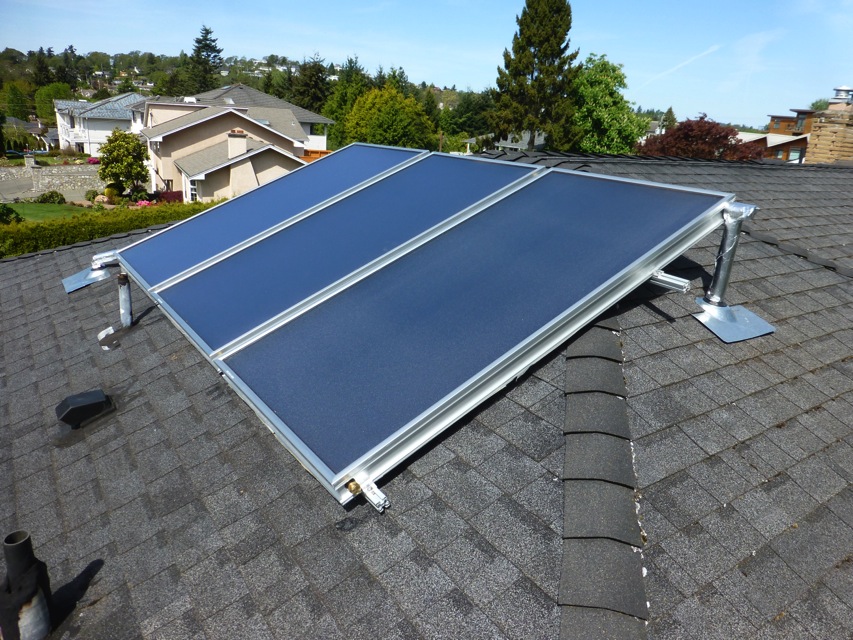
Evacuated tube, flat plate and heat pipe collectors all heat water from sunlight, but they differ in the temperature they reach, how they handle cold and snow, and what they cost to ship, install and warrant. This guide compares them criterion by criterion.
Short answer: Evacuated tube collectors reach higher temperatures and keep more of their output in cold or cloudy weather, while flat plate collectors cost less per square metre, are sturdier and handle snow and wind better. Heat pipe collectors are a type of evacuated tube design that transfers heat through a sealed pipe, so they are not a separate third choice. For hot water in most markets a flat plate collector is the simpler and cheaper option, and evacuated tubes earn their place in cold climates and for higher-temperature process loads.
Key Takeaways
- Flat plate collectors suit hot water up to roughly 200 °F (93 °C), and evacuated tubes reach 170–350 °F according to the U.S. Department of Energy.
- Evacuated tubes lose less heat in cold, low-sun conditions; flat plates cost less and tolerate wind, snow and handling better.
- Heat pipe collectors are evacuated tube collectors with a sealed pipe, so compare them on tube quality, not on the name.
- Stagnation temperature, freeze risk and local installer skill should decide the choice before price does.
How Do the Three Collector Types Work?
All three collectors absorb sunlight on a dark surface and move the heat into a fluid, and they differ in how well they keep that heat from escaping. A flat plate collector has an absorber plate under a glass cover in an insulated box, and the U.S. Energy Information Administration calls flat plate collectors the most common type, used when temperatures lower than 200 °F are sufficient.
The three designs differ as follows:
- Flat plate: an absorber, a glass cover, insulation and a frame in one panel. Heat is carried by liquid in tubes bonded to the plate.
- Evacuated tube (direct flow): a row of glass tubes with the air removed. Fluid passes through a tube inside each glass tube, and the vacuum cuts convection and conduction losses.
- Evacuated tube with heat pipe: each glass tube holds a sealed heat pipe that carries heat to a manifold, so the water does not flow through the tubes.
The U.S. Department of Energy’s Solar Vision Study gives 170–350 °F as the temperature range of evacuated tube collectors and a typical overall efficiency of 40%–50% for a liquid flat plate collector in its normal operating range. Our earlier guide to flat plate versus evacuated tube collectors covers the basic comparison; this guide adds heat pipe designs and the stocking questions.
Which Collector Performs Better?
Evacuated tubes usually deliver more heat per square metre once the water is much hotter than the outside air, while flat plates match or beat them when the temperature difference is small. The U.S. Department of Energy’s Federal Technology Alert on solar water heating compares three representative collectors on a clear day with 6.4 kWh/m² of sunshine, and the result shows the crossover.
| Water entering the collector is above outdoor air by | Unglazed (pool type) | Glazed flat plate | Evacuated tube |
|---|---|---|---|
| 5 °C (low) | 4.1 kWh/m²/day | 4.0 kWh/m²/day | 3.0 kWh/m²/day |
| 20 °C (medium) | 1.5 kWh/m²/day | 3.2 kWh/m²/day | 2.8 kWh/m²/day |
| 50 °C (high) | 0 kWh/m²/day | 2.0 kWh/m²/day | 2.4 kWh/m²/day |
Glazed flat plate collectors lead in the medium range, and evacuated tubes overtake them at a 50 °C temperature difference. The same document calls evacuated-tube collectors the most efficient type for cold climates with low-level diffuse sunlight. The table uses one representative collector per type, so read the efficiency curve of the actual model you plan to supply. Use this rule when you compare datasheets:
- Read the efficiency curve, not a single efficiency number. Efficiency falls as the collector gets hotter than the air.
- Compare output per square metre of roof area as well as per square metre of absorber, because tube arrays leave gaps between tubes.
- Ask for the collector test report to ISO 9806 or the equivalent regional standard so that the two types are tested the same way.

How Do They Compare on Cost, Weight, Snow and Wind?
Flat plate collectors usually win on cost and robustness, and evacuated tubes win on cold-weather output and maximum temperature. The table sets out the main purchase and installation criteria.
| Criterion | Flat plate | Evacuated tube | Heat pipe tube |
|---|---|---|---|
| Temperature range | Up to about 200 °F (93 °C) | 170–350 °F | Same tube range; heat pipe design can limit the working temperature |
| Cold, cloudy weather | Loses more heat to the air | Keeps more output | Keeps more output |
| Purchase price | Lower | Higher | Higher |
| Weight and handling | Heavier panel, robust | Light tubes, fragile glass | Light tubes, fragile glass |
| Hail, storms and vandalism | Tempered glass cover in a framed panel; check the hail rating | Must be protected from vandalism; can be damaged by hail or hurricanes (DOE) | Same as evacuated tube |
| Replacement | Whole panel | One tube at a time | One tube at a time |
| Overheating | Lower stagnation temperature | Higher stagnation temperature | Varies by design; ask for stagnation data |
Cost and warranty differences are market-dependent. The DOE’s Solar Vision Study says evacuated-tube collectors can be twice as expensive as flat plate collectors, while a 2011 article from HeatSpring reported a gap of roughly 10–15% and flat plate warranties of 20 years against 10 years for tubes. The estimates differ widely and are old, so confirm both cost and warranty terms with current quotations.

Which Collector Should You Choose for Your Market?
Choose a flat plate collector for warm and moderate climates with domestic or commercial hot water loads, and consider evacuated tubes for cold climates, high-temperature loads and space heating at radiator temperatures. Match the type to the market using these cases:
- Warm and frost-free markets: flat plate, usually in a thermosyphon system. See our guide to thermosyphon system design.
- Cold or snowy regions: an indirect system with antifreeze, and evacuated tubes where winter output matters most. A flat plate collector with a split system can also work; see split systems.
- Commercial hot water at 45–60 °C: flat plate collectors, because the load is low-temperature and the area is large.
- Process heat above 90 °C or space heating at 160–180 °F: evacuated tube or concentrating collectors.
- Hard water: the DOE flags hard water as a concern for passive systems, so choose a closed loop or water treatment where the water is hard.
Two points make the stocking decision easier. Fewer product lines mean fewer spare parts, and a flat plate range is typically lower-risk to ship because there is no glass tube to break.
How Millionsun Supplies Flat Plate and Heat Pipe Flat Plate Collectors
Millionsun is a source factory in Dongguan, Guangdong, producing flat plate collectors since 2006 on an 8,000 m² site with more than 80 employees and 6 automated production lines. We do not make evacuated tube collectors, so this guide compares them for information only.
Our black and blue flat plate collectors have low iron patterned tempered glass of 3.2 mm with transmission of at least 92% and an absorptance of 95% ±2%. Their maximum idle (stagnation) temperature is 152 °C, working pressure is 12 bar, and every collector is tested at 20 bar. We also supply a heat pipe flat plate collector, with OEM and ODM options and supply as complete units, SKD, CKD or components.
Looking for a collector supplier for your market?
Millionsun is a source factory in Dongguan, China, producing flat plate collectors, solar water tanks and complete systems since 2006. We supply complete units, SKD, CKD or components, with OEM and ODM options. Send your climate and target volumes and we will reply within 24 hours.
Request a QuoteFrequently Asked Questions
Is an evacuated tube collector better than a flat plate collector?
An evacuated tube collector is better than a flat plate collector at high temperatures and in cold, low-sun weather, but a flat plate collector costs less and is more robust. In warm climates the performance gap is small, so the flat plate is usually the better value.
What is the difference between a heat pipe and an evacuated tube collector?
A heat pipe collector is a type of evacuated tube collector in which a sealed pipe carries heat from each tube to a manifold, while a direct flow tube passes the fluid through the tube itself. Heat pipe tubes can be replaced without draining the system.
Which collector lasts longer?
Neither type has a fixed life, because the real life depends on water quality, glass and absorber quality and installation. Ask each supplier for written warranty terms and test reports, and treat old rules of thumb such as 20 years for flat plates and 10 years for tubes as a reason to ask, not as a guarantee.
Do evacuated tubes work better in cold, snowy climates?
Evacuated tubes keep more of their output in cold weather, and the DOE calls them the most efficient type for cold climates with low-level diffuse sunlight. They need protection from vandalism and can be damaged by hail or hurricanes, so check snow-load and impact ratings for the site.
Bottom Line
- Specify flat plate collectors for warm and moderate markets and low-temperature commercial loads.
- Consider evacuated or heat pipe tubes for cold climates and higher-temperature loads.
- Compare efficiency curves and test reports, not catalogue peak figures.