 跳至内容

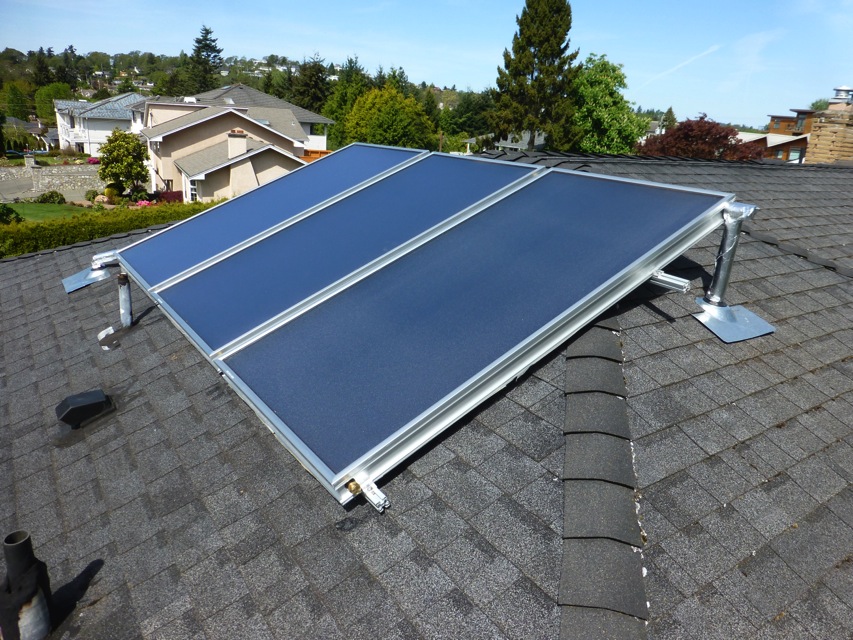
Public sources sell plant cost figures behind a paywall, and free ones rarely agree. This guide gives the planning logic instead: which stations a flat plate collector assembly plant needs, what drives floor space, staffing and capital, and when importing finished collectors is the better decision.
Short answer: A flat plate collector assembly plant needs stations for absorber preparation or sourcing, frame and back plate assembly, insulation and glazing, sealing and curing, pressure and leak testing, labelling and packing, plus a store for incoming parts. Capital, floor space and staffing depend on the target volume, whether the absorber is made or bought, and how much testing and certification the market requires. The reliable way to get a cost is a written equipment and staffing plan sent to several suppliers for quotation.
Key Takeaways
- Decide the product scope first: collectors only, collectors plus tanks, or complete systems.
- The biggest cost lever is the absorber: buying finished absorber plates removes the coating and welding lines from the first phase.
- Testing and a documented production control matter as much as machines, because certification inspects both.
- Plan assembly in stages: start with CKD or SKD kits, then bring selected processes in-house as volume proves out.
What Should the Plant Produce First?
The first decision is product scope, because collectors, tanks and complete systems need different equipment. A collector assembly line is the lowest-risk start, since collectors are the highest-value component of a solar water heater and can be assembled from kits with limited machinery.
- Collectors only: frame, absorber, glass, insulation and back plate assembly, with pressure and leak testing.
- Collectors plus tanks: adds cutting, rolling, welding, foaming and pressure testing for tanks. This is a separate workshop, not an add-on station.
- Complete systems: adds kitting, stands, controllers and pump stations, which are usually bought in and packed with the collector and tank.
Public cost reports reach the same split. An IMARC prefeasibility report page lists unit operations, land, machinery, raw materials, utilities, staffing and cost as report sections, but the figures are sold, not published. Treat any single published number for “plant cost” as unverified until a supplier quotes the same scope.
What Process Steps and Stations Does a Collector Assembly Line Need?
A flat plate collector line needs about eight stations, from incoming inspection to packing, and each can be sized to the target daily output. The table maps the stations to the components in a typical flat plate collector.
| Station | What happens | Typical equipment and checks |
|---|---|---|
| 1. Incoming inspection and store | Check absorbers, glass, frame profiles, insulation and seals against the specification | Measuring tools, sample records, shelved and covered storage |
| 2. Frame preparation | Cut, assemble and fix the aluminium frame; fit corner joints and gaskets | Cutting saw, jigs, corner crimper or fastening tools |
| 3. Absorber preparation | Inspect or weld the absorber, connect headers and risers | Welding equipment if the absorber is made in-house; leak check |
| 4. Back plate and insulation | Fit back plate, then insulation layer | Cutting table, handling aids |
| 5. Absorber placement and header sealing | Place the absorber and seal the header penetrations | Sealing tools, torque or fit checks |
| 6. Glazing and sealing | Fit the cover glass with gasket and sealant, then cure | Glass handling aids, sealant dispensing, curing area |
| 7. Pressure and leak test | Test each collector above its working pressure | Pressure test bench with gauges and records |
| 8. Labelling and packing | Apply serial number and label, then pack for transport | Label printer, packing materials, pallets |
For reference, a Millionsun flat plate collector uses a 6063 aluminium alloy frame, a 3.2 mm low-iron tempered glass cover with transmission of at least 92%, 30 mm glass wool insulation at 35 kg/m³, a 0.5 mm aluminium back plate and EPDM and silicone sealing. Each station above maps to one of those parts. See the black flat plate collector page for the full specification.

Should the Plant Make or Buy Its Absorbers?
Buying finished absorber plates is the lower-risk entry route, because the absorber is the most capital-intensive and skill-intensive part of the collector. Making it in-house adds coating, welding and quality equipment, and a coating line also needs environmental permits, ventilation and process control.
| Factor | Buy absorber plates | Make absorbers in-house |
|---|---|---|
| Starting capital | Lower; no coating or welding line | Higher; coating, welding and testing equipment |
| Skills needed | Assembly and testing | Coating process control and welding |
| Quality control | Rely on supplier batch records and incoming checks | Own the coating and weld quality |
| Unit cost at scale | Supplier margin included | Potentially lower once volume is high and stable |
| Flexibility | Choose black or blue coating, size and fin material per order | Full control, with changeover cost |
Most new plants start with bought-in absorbers and revisit the decision when monthly volume is steady. Millionsun supplies black and blue selective coating absorber plates with copper fin or aluminium sheet options in custom sizes; see the absorber range and the page for local manufacturers.
How Much Floor Space and Staff Does a Collector Plant Need?
Floor space and staffing depend on target output, shift pattern and how much work is manual, so they should be calculated from your own volume plan, not copied from a quoted example. Work out each from the stations above.
- Output target: decide collectors per day and working days per month. Everything else follows from this.
- Station cycle times: time each station on a pilot batch. The slowest station sets the line rate, and extra stations or parallel stations remove the bottleneck.
- Floor area: add the line itself, raw material store, finished goods store, curing area, test area and handling aisles. Collectors are large and flat, so storage is often the largest area.
- Handling: plan forklift or pallet-truck routes, and glass handling aids to protect workers and cover glass.
- Staff: operators per station, a test and quality role, a storekeeper and a supervisor. Add training time before the first production run.
- Utilities: compressed air, electricity for tools and test equipment, and ventilation for sealant curing.
Ask each equipment supplier to confirm the layout footprint and the labour needed at your target output in the quotation, and compare them against your own station timing.
What Drives Solar Water Heater Plant Cost?
Plant cost is driven by scope, automation level, absorber route, test equipment and certification, and is best estimated as a sum of quoted line items. Capital cost has these main components:
- Building and fit-out: leased or built, flooring, power, lighting, compressed air and ventilation.
- Assembly equipment: frame tools, handling aids, sealing and curing equipment, labelling and packing.
- Absorber equipment (if made in-house): coating, welding and coating test equipment.
- Test equipment: a pressure test bench, and measuring tools for dimensions, glass and coating checks.
- Certification and testing fees: laboratory tests, certification body fees and factory inspection for each target market.
- Working capital: raw material stock, which for glass, absorbers and frames may be ordered by the container.
Operating cost is mainly materials, labour, freight of inbound parts, utilities and warranty provisions. Materials are usually the largest share, so bought-in kit price and inbound freight are the first numbers to verify.
What Testing and Certification Does a New Collector Plant Need?
A new plant needs a documented production control system and tested collector designs before it can sell into regulated markets. For Europe, the Solar Keymark scheme administered by DIN CERTCO requires the manufacturer to run a factory production control that reflects the relevant product standards and elements of EN ISO 9001. The quality system is controlled by an annual inspection, and type testing takes place at least every two years.
The product itself is tested to ISO 9806. The IEA SHC guide to ISO 9806:2017 lists the durability tests, including exposure, standard stagnation temperature determination, thermal shock, freeze resistance and internal pressure tests. Independent laboratory tests are a fixed cost per collector design, so limit the number of designs in the first phase.
- Write the production control documents early: incoming checks, in-process checks, final tests, handling, storage, packing and marking.
- Keep records per unit: serial number, date, batch of key materials and test result.
- Check which certificates the target market asks for. Our guide to collector certification by market compares Solar Keymark, SRCC OG-100 and AS/NZS 2712.
- Ask how a CKD or SKD kit supplier’s certificate applies. Certification generally attaches to the manufacturing site and model, so confirm the certification body’s rules before using a supplier’s certificate on a locally assembled product.

When Is It Better to Import Collectors Than to Assemble Them?
Importing finished collectors is better when volume is low or unproven, when the market needs certified models quickly, or when local labour and freight savings are small. Assembling locally becomes attractive when volume is steady, import duties or freight on finished goods are high, or local content rules favour domestic assembly.
| Route | Best when | Main risk |
|---|---|---|
| Import complete collectors | Volume is unproven; speed to market matters | Higher freight volume; dependent on one supplier |
| Import SKD kits, assemble locally | Volume is growing; want local labour and brand control | Needs testing equipment and trained staff |
| Import CKD kits, assemble locally | Volume is steady and stable; freight savings matter | Needs more assembly skill and parts control |
| Import components, make some locally | Local supply of frames, glass or packaging exists | Multiple suppliers to qualify and manage |
Our guide to CKD, SKD and complete flat plate collectors explains the three supply forms in detail. Run the comparison on landed cost per collector, including freight, duty, labour, testing and yield loss, not on factory-gate price alone.
What Millionsun Supplies to Collector Assembly Plants
Millionsun is a source factory in Dongguan, Guangdong, producing flat plate collectors since 2006 on an 8,000 m² site with more than 80 employees and 6 automated production lines. Collector capacity is 20,000 m² per month, absorbers are coated in-house on Millionsun’s own coating line, and welding is done on 2 ultrasonic lines and 1 laser line.
Supply forms for local manufacturers include complete units, SKD, CKD and individual components, so an assembly plant can start with kits and add processes later. Absorber batches are tested for coating performance before shipment, every collector is 100% pressure tested at a 20 bar test pressure for a 12 bar working pressure, and each collector carries a unique serial number linked to batch, production date and QC records. Solar Keymark was obtained for collectors in 2008 and again for collectors and systems in 2011; ask for the certificate details for the model you plan to assemble and the certification body’s rules for local assembly.
Samples start at 1–2 units, and we reply to enquiries within 24 hours. Quantities and lead times for kits are confirmed in the quotation. See the page for local manufacturers, or compare the blue flat plate collector and black flat plate collector specifications.
Planning a collector assembly plant?
Millionsun is a source factory in Dongguan, China, producing flat plate collectors, absorbers, solar water tanks and system accessories since 2006. We supply complete units, SKD, CKD or components, with OEM and ODM options for logo, labels, packaging, coating colour, size and technical documentation. Send your target volume and market and we will reply within 24 hours.
Request a QuoteFrequently Asked Questions
How much does a solar water heater manufacturing plant cost?
A solar water heater manufacturing plant cost depends on product scope, output, automation, absorber route and certification, so there is no reliable single figure. Published project reports sell their numbers, so get written quotations per line item against your own output target.
What equipment is needed to assemble flat plate solar collectors?
Assembling flat plate solar collectors needs frame tools, handling aids for glass, sealing and curing equipment, a pressure test bench, and labelling and packing equipment. Add coating and welding equipment only if absorbers are made in-house.
Can I buy absorber plates and build collectors in my own factory?
Yes, you can buy absorber plates and build collectors in your own factory, and many assembly plants start this way. Specify the coating, fin material, size and test records for the absorbers, and run incoming checks on every batch.
Do I need certification to sell locally assembled collectors?
You need the certificates that your target market requires, such as Solar Keymark for Europe, and the certificate usually attaches to a manufacturing site and model. Check the certification body’s rules before using a supplier’s certificate on a locally assembled collector.
Is it cheaper to assemble collectors locally or import them?
Assembling collectors locally is cheaper only when volume is steady and savings on freight, duty and labour exceed the extra cost of testing, training and yield loss. Compare the landed cost per collector for each route before investing.
Bottom Line
- Fix the product scope and output target before asking for any price.
- Start with bought-in absorbers or kits, and bring processes in-house when volume proves out.
- Budget for testing, documented production control and certification, not just machines.
- Compare import and local assembly on landed cost per collector.