 跳至内容

Thermosyphon vs Split Solar Water Heater: Which System to Stock for Your Market
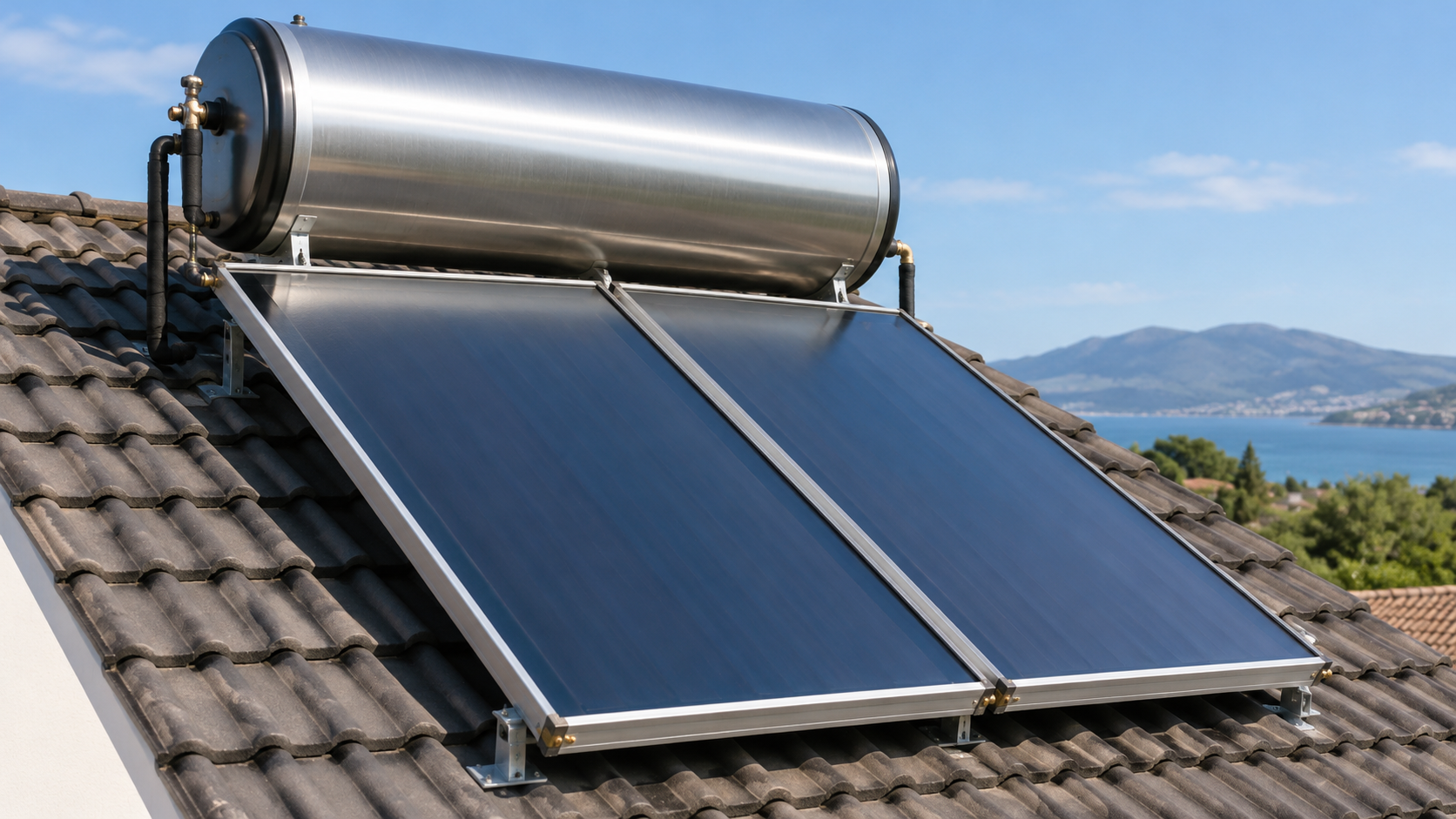
Short answer: Choose thermosyphon systems for simple frost-free projects where the tank can sit above the collectors. Choose split systems when roof loading, appearance, freezing conditions or indoor tank placement matters more than minimum component count.
Thermosyphon vs split: the practical difference
| Point | Thermosyphon | Split |
|---|---|---|
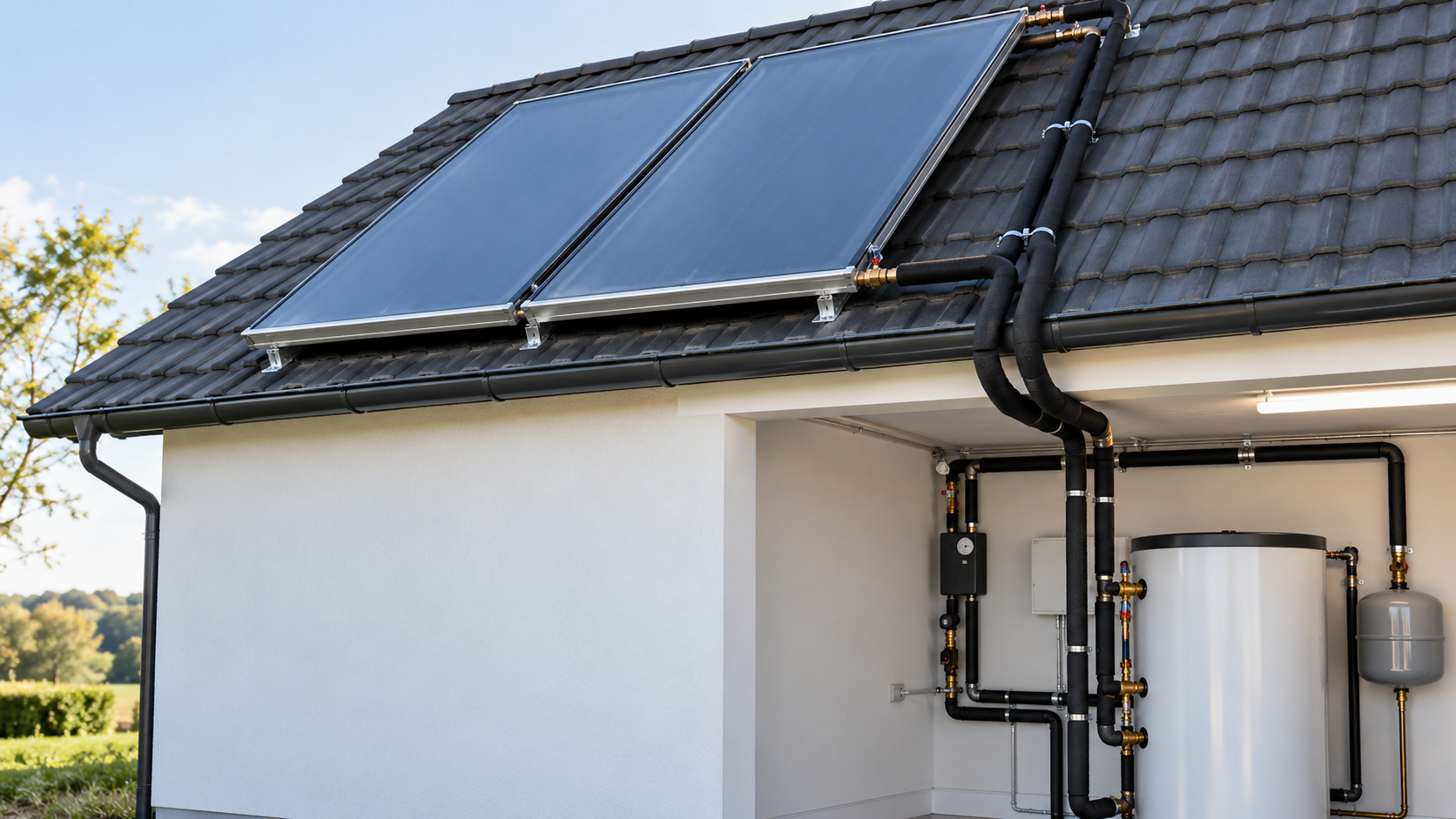
| Tank location | Above collectors on the roof | Indoors or in a plant room |
| Circulation | Natural thermosyphon | Pump and controller |
| Roof load | Higher because tank is full of water | Lower on the roof |
| Freeze protection | Best in frost-free climates | Closed glycol or drain-back options |
| Service | Fewer controls and parts | More components, greater layout flexibility |
What should a distributor stock?
Stock thermosyphon systems for standard residential and light-commercial projects in warm markets, with common tank capacities of 150, 200, 300 and 400 litres. Stock split systems for markets with frost, strict roof-load limits, concealed tanks or longer pipe runs. In both cases, verify collector pressure, stagnation temperature, tank pressure, safety valves and certification before ordering.
Logistics and after-sales support
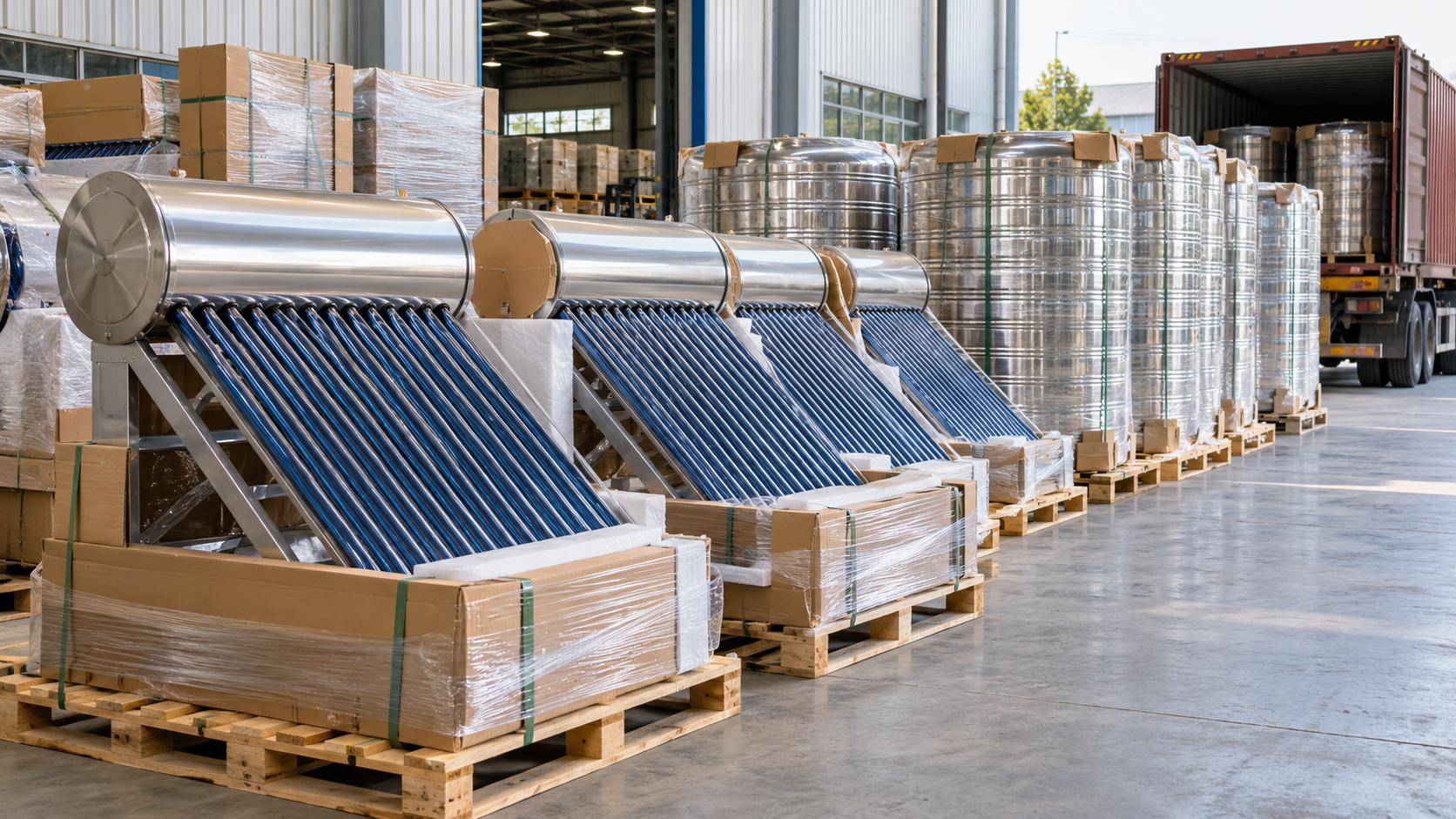
Ask the factory for samples, serial-number traceability, pressure-test records, spare-part lead times and supply options such as complete units, SKD, CKD or components. A supplier that can provide replacement sensors, seals, valves and controllers for the full product life reduces the risk of a mixed-brand service fleet.
Bottom line
Thermosyphon wins on simplicity; split wins on flexibility. Match the system to climate, roof structure, tank location, local certification and the service capability of your market.