
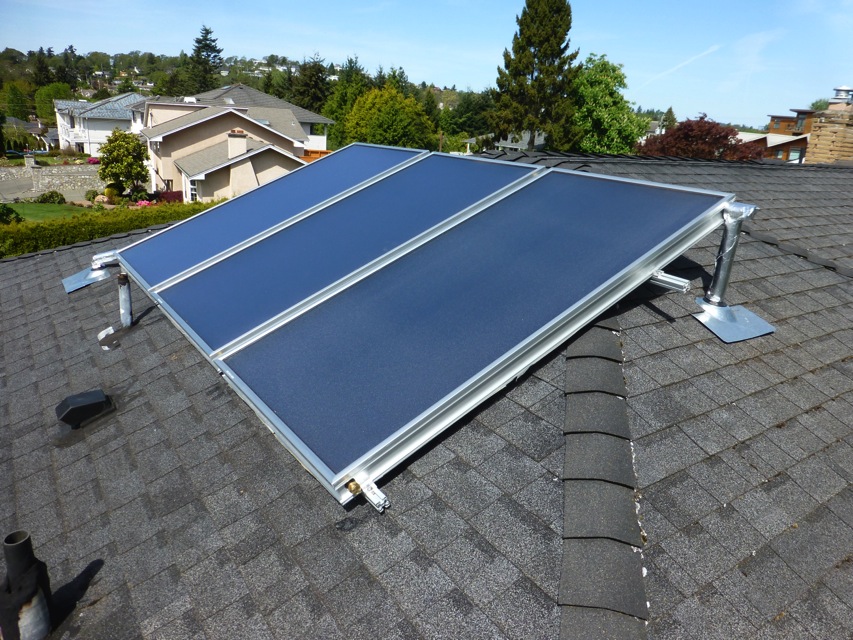
Import duties and freight can take a big share of the margin on finished collectors. Knocked-down kits recover some of it, but only if your team can assemble, seal and pressure-test every unit as well as the factory does.
Short answer: Buy complete collectors if you sell to projects and have no assembly capability. Choose SKD (pre-welded absorbers and pre-assembled frames) if you want some local value added with limited equipment. Choose CKD (a full parts kit with instructions) if duties, “local content” rules or freight make finished imports uncompetitive and you can run a small assembly line. Buy individual components if you already manufacture collectors and want a better absorber or glass supply. The right choice depends on duty on finished goods versus parts, labour cost, available space and equipment, and whether you can hold certification for a locally assembled product.
Key Takeaways
- CKD and SKD move work from the exporting factory to your site. The savings come from duty, freight and local labour, and the risk comes from assembly quality.
- The critical local steps are glazing and sealing, frame assembly and a 100% pressure test on every unit. Skipping the pressure test transfers the leak risk to your installers.
- Certification usually follows the production site. A collector assembled in your factory generally needs its own certification route rather than the exporter’s certificate.
- In one Millionsun case, a Southeast Asian manufacturer reached 500 collectors a month within six months and reported an 18–22% lower production cost than importing finished collectors.
What Do CKD, SKD and Complete Supply Mean for Solar Collectors?
The terms come from the automotive and electronics industries, and each describes how much of the product is assembled before it ships. For flat plate solar collectors, Millionsun ships four formats:
| Format | What we ship | What you do locally | Best for |
|---|---|---|---|
| Complete collector | Finished, pressure-tested, serial-numbered units | Nothing: store, sell, install | Distributors, installers, EPC projects |
| SKD (semi-knocked-down) | Pre-welded absorber and tube sets, pre-assembled frames | Insulation, back plate, glazing, sealing, pressure test, labelling | Partial local assembly with limited labour and equipment |
| CKD (completely knocked-down) | All parts for a set number of collectors in one package, with assembly instructions | Full assembly of the collector from the kit | Turn-key local assembly operations |
| Individual components | Absorber sheets, tubes, frames, glass, insulation, each packed separately | Your own production process, including absorber welding if needed | Established local manufacturers |
How much welding comes pre-done varies between suppliers and even between quotations. Before you compare prices, confirm in writing whether the absorber-to-tube and header welds are done before shipment. The weld is the step that needs the most specialised equipment (ultrasonic or laser welding lines) and has the biggest effect on heat transfer.
What Is Inside a Flat Plate Collector Kit?
A complete component package for a standard flat plate collector contains the following. These are Millionsun’s standard specifications, which match the finished collectors described in our flat plate solar collector buyer’s guide.
| Component | Standard specification | Local handling risk |
|---|---|---|
| Absorber sheet | Full aluminium, black or blue selective coating | Scratches damage the coating: handle with gloves, keep protective film on |
| Copper header and riser tubes | Φ22 mm header, Φ8 mm risers | Dented tubes restrict flow and can crack under pressure |
| Frame profile | 6063 aluminium alloy, silver or black | Corner joints must be square, or the glass seal won’t hold |
| Glass cover | Low-iron patterned tempered glass, 3.2 mm, ≥92% transmission | Breakage in transit and handling; edge chips can lead to cracks later |
| Insulation | Glass wool, 30 mm, 35 kg/m³ | Must stay dry; wet wool loses insulation value |
| Back plate | Aluminium sheet, 0.5 mm | Low risk |
| Sealing | EPDM gasket | Wrong compression causes condensation and dust inside the glazing |
| Fasteners and fittings | Assembly-ready hardware kit | Keep kits complete per collector to avoid line stoppages |
When Does Local Assembly Pay Off?
Local assembly pays off when the cost you remove (duty on finished goods, freight volume, import margin) is bigger than the cost you add (labour, space, equipment, scrap, quality control). Four factors decide it:
- The duty gap. Some markets tax finished equipment more heavily than parts or raw materials, or give preference to locally assembled goods in public tenders. Check your customs tariff (the WCO Harmonized System is the basis for most national tariffs) for both the finished collector and each component before you build a business case. The HS classification of a kit can differ from that of a finished collector.
- Freight density. A finished collector is mostly air and frame. Knocked-down parts pack more densely, so the same container carries material for more collectors. Ask your supplier for a container-loading plan for each format and compare the cost per collector.
- Labour and skills. Glazing, sealing and pressure testing are learnable, but they take disciplined procedures. Absorber welding, if you take it on, needs specialised machines and process control.
- Volume. Fixed costs (space, pressure test rig, jigs, a QC person) need a steady volume to spread over. A few hundred collectors a year rarely justifies a line. A few hundred a month usually does.
Case Study: From Importer to 500 Collectors a Month
A manufacturer in Southeast Asia had been importing finished flat plate collectors from China, but import duties and shipping were squeezing its margin. It had a metal fabrication workshop and 15 technicians, but no experience with selective coatings, collector assembly or solar thermal testing.
Millionsun supplied:
- A full component package: black-coated absorber sheets, copper tubing, aluminium frames, glass, insulation, back plates and sealing kits, sized for 500 collectors a month.
- Assembly process documents based on Millionsun’s own production line and adapted for manual assembly with the customer’s equipment level.
- A QC guideline package: inspection checkpoints, pressure test procedure and pass/fail criteria for each production stage.
- Three video-call sessions in the first production month to troubleshoot line layout, welding parameters and sealing technique.
The customer’s production director summed it up: “Millionsun gave us more than components. They gave us a production methodology.” This business had metalworking skills, a local market large enough for 500 units a month, and a clear duty and freight disadvantage on finished imports. A distributor selling a few containers a year of mixed products would usually do better with complete collectors.
Quality Controls You Must Run Locally
With CKD or SKD supply, some of the factory’s quality controls move to your line. At minimum, keep these checks:
- Incoming inspection: count and check each kit against the packing list. Inspect glass edges and absorber coating on arrival.
- Frame squareness and sealing: check diagonals before glazing, and use the specified gasket compression.
- 100% pressure test of every assembled collector. ISO 9806 type testing uses 1.5 times the maximum operating pressure (IEA SHC guide), and Millionsun tests its own finished units at 20 bar for a 12 bar rating. Agree your test pressure and hold time with your supplier.
- Serial numbers and records: log kit batch, assembly date, test result and inspector for each unit.
- Final visual inspection: condensation, debris under the glass, frame damage, label accuracy.
These mirror the checks in our flat plate collector quality control checklist, which you can use as a template for your own QC plan.
What Happens to Certification?
This is the question most business plans skip. Schemes such as the Solar Keymark certify a product made at a specific production site and include factory inspections of that site. A collector assembled in your workshop from imported parts is generally a product of your production site, so the exporter’s certificate may not cover it. Expect to need your own certification route (testing, factory inspection, listing) for locally assembled collectors, or a scheme-approved arrangement with your supplier. Budget the time and cost before you commit. Details by market are in solar collector certification by market.
Which Supply Model Should You Choose?
| Your situation | Recommended format |
|---|---|
| Distributor or installer, no workshop, mixed product range | Complete collectors |
| Want a local brand story, small workshop, limited equipment | SKD |
| High duty on finished goods, steady volume of hundreds of units a month | CKD |
| Existing collector manufacturer with welding capability | Components (e.g. absorber sheets) |
| Public tenders that reward local assembly | SKD or CKD, with certification planned in advance |
Get a landed-cost comparison for your market
Tell us your country, annual volume and collector size. We’ll prepare complete, SKD and CKD options with container-loading plans so you can compare the cost per collector, not just the price per kit. See our support for local manufacturers.
Request a Supply ComparisonFrequently Asked Questions
What is the difference between CKD and SKD solar collectors?
SKD kits arrive partly assembled, typically with welded absorber-tube sets and pre-assembled frames. CKD kits arrive as a full set of parts for final assembly. SKD needs less local equipment and skill, and CKD moves more value and cost savings to your site.
What equipment do I need to assemble flat plate collectors?
For SKD and most CKD assembly: work tables and jigs for frames, glass-handling tools, sealing tools, a pressure test rig and a labelling or serial-number system. Absorber welding needs specialised ultrasonic or laser welding machines, which is why most new assemblers start with pre-welded absorbers.
Is CKD always cheaper than importing finished collectors?
No. It’s cheaper only when the savings on duty, freight and margin exceed the added labour, space, equipment, scrap and certification costs. Model the cost per finished collector for each format before you decide.
Bottom Line
- Choose the supply format on landed cost per finished collector, not kit price.
- Keep pressure testing, sealing checks and serial-number records on your own line.
- Plan certification for locally assembled collectors before the first kit arrives.
Start with the flat plate solar collector buyer’s guide for the full sourcing checklist.