 跳至内容

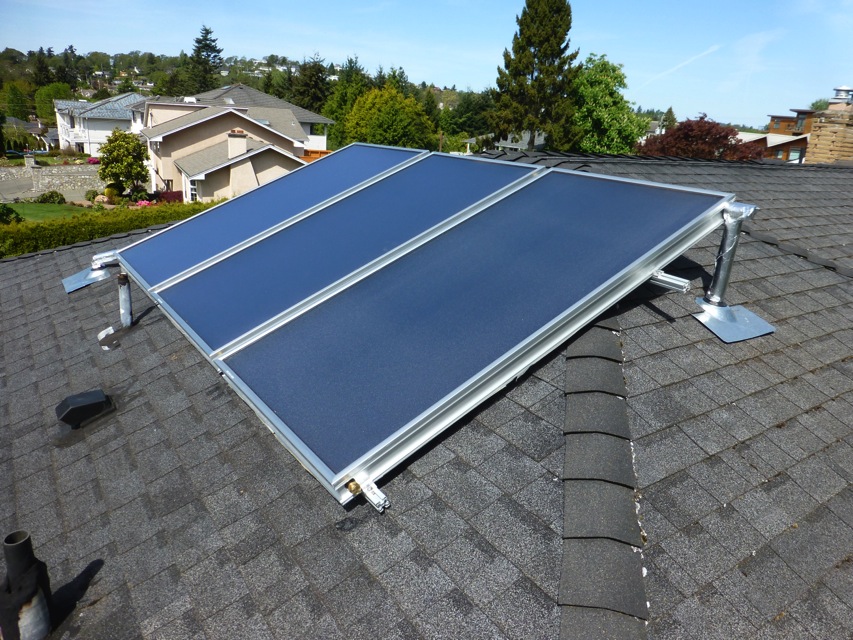
Solar pool heating made up most of US solar thermal capacity in 2009, and it uses simpler collectors than hot water heating. This guide explains how a system works, how to size it from the pool surface area and when a glazed collector is the better choice.
Short answer: A solar pool heating system pumps pool water through solar collectors on a roof or rack and returns the warmed water to the pool, using the existing filter pump. Outdoor pools in warm climates normally use low-cost unglazed collectors with a total area of 50%–100% of the pool surface area, according to the U.S. Department of Energy. Indoor pools, hot tubs, spas and cold-climate sites usually need glazed flat plate or evacuated tube collectors because they must work at lower outdoor temperatures.
Key Takeaways
- A solar pool heater uses the pool’s own filter pump and a collector loop with a valve or controller.
- Unglazed collectors suit outdoor pools in warm weather; glazed or evacuated collectors suit indoor pools, spas and cold climates.
- Collector area is sized as a percentage of the pool surface area, from about 50% to 100% depending on climate and cover use.
- Tilt, orientation, shade and distance to the pool equipment matter as much as collector area.
How Does a Solar Pool Heating System Work?
A solar pool heating system takes water from the pool, pumps it through collectors where the sun warms it, and returns it to the pool. The U.S. Department of Energy’s Solar Vision Study explains that these systems typically use the existing pool-filtration system to pump water from the pool to a solar collector, and that the heated water is returned directly to the pool.
A basic system has five parts:
- Filter and pump: the existing pool circulation system moves the water.
- Collectors: panels on a roof or ground rack where the water is heated.
- Flow control: a manual or automatic valve, or a controller with sensors, that sends water through the collectors only when they are warmer than the pool.
- Plumbing: supply and return pipes between the pool equipment and the collectors.
- Freeze protection: vacuum-relief and drain-down valves, or manual draining, for sites that can freeze.
Because the water in the collector is pool water at only a few degrees above the pool temperature, a pool system needs much less temperature lift than a hot water system. Our guide to solar hot water system types covers the higher-temperature designs.
Which Collector Type Suits a Solar Pool Heater?
Unglazed collectors suit outdoor pools in warm weather because pool systems run near the surrounding air temperature, and glazed or evacuated collectors suit colder conditions. The Solar Vision Study says solar pool heating systems typically operate near air temperature and can therefore use unglazed flat plate collectors, often made from polymers. It adds that glazed flat plate or evacuated tube collectors may also be used, usually for indoor pools, hot tubs or spas in colder climates. The U.S. Energy Information Administration describes pool collectors as flat plate collectors without a cover or insulation.
| Collector | Best for | Strength | Limit |
|---|---|---|---|
| Unglazed (polymer) | Outdoor pools in warm, sunny weather | Lowest cost, simple | Loses heat quickly in wind and cold |
| Glazed flat plate | Indoor pools, hot tubs, spas, cooler or windy sites | Works in lower air temperatures and extends the season | Higher cost; check pool-water compatibility |
| Evacuated tube | Cold climates and spas needing higher temperatures | Keeps output in cold weather | Highest cost; fragile glass |
The DOE’s Federal Technology Alert on solar water heating shows why the cover matters: on a clear day, an unglazed collector delivers about 4.1 kWh/m² when the water is only 5 °C above the air, but about 1.5 kWh/m² at 20 °C above and nothing at 50 °C above, while a glazed collector still delivers 3.2 and 2.0 kWh/m² at those differences. Pool water is also chemically treated, so confirm the wetted materials of any collector, and whether it needs a heat exchanger, with the supplier.

How Do You Size a Solar Pool Heating System?
Size the collector area as a percentage of the pool surface area, and use a higher percentage for cooler climates, longer seasons and uncovered pools. The Solar Vision Study states that solar pool heaters generally use collectors with a total area of 50%–100% of the pool’s surface area and that a larger system lengthens the pool season. An installer guide from Spheral Solar uses a 100% rule of thumb and then adjusts it for sun, air temperature, wind, a pool cover and the target temperature, so published rules differ.
Use this method:
- Calculate the pool surface area. Rectangle: length × width. Circle: π × radius².
- Pick a starting coverage. Use about 50% in warm climates with a pool cover, and move toward 100% for cooler sites, long seasons or uncovered pools.
- Adjust for conditions. Raise it for shade, wind, a higher target temperature or a longer season, and lower it with a cover.
- Convert to collector count. Divide the required area by the area of one collector.
A worked example shows the arithmetic with illustrative numbers: a 9 m × 4.5 m pool has 40.5 m² of surface. At 50% coverage the collector area is 20.25 m², and at 100% it is 40.5 m². With 2 m² collectors that is about 10 to 20 panels, and the final number depends on the site and the pool cover. Do not oversize far beyond 100%, because Spheral Solar notes that returns diminish once the pool water approaches the collector temperature.

Where Should the Collectors Go?
Collectors perform best facing the equator, tilted close to the latitude, unshaded between mid-morning and mid-afternoon, and close to the pool pump. These siting rules apply to the southern hemisphere with north-facing roofs reversed.
- Orientation: south in the northern hemisphere, north in the southern hemisphere, with some tolerance either side.
- Tilt: roughly the latitude for year-round heating, and lower for summer-only pools. A flat roof needs a rack.
- Shade: avoid trees and parapets in the core hours of sunlight.
- Pipe length: keep it short and insulated to limit heat loss and pump head.
- Roof load: check the structure for the weight of filled collectors and for wind uplift.
How Much Does Solar Pool Heating Cost and Pay Back?
The U.S. Department of Energy’s Solar Vision Study gives an installed cost of $2,000 to $10,000, or $7 to $12 per square foot, a typical payback of 1.5 to 7 years, and a life expectancy of 10 to 20 years for solar pool heaters. The FEMP Federal Technology Alert says unglazed collectors should last 15 to 20 years and must be drained when the pool closes for winter and when freezing is expected. These figures are old, so use them only as a ratio check against current local prices.
Payback is shorter where the pool would otherwise be heated with electricity, gas or LPG, and longer where it is not heated at all. For a commercial pool such as a hotel, school or sports club, the saving is easier to prove, and our guide to solar hot water for hotels covers how to size the hot water side.
How Millionsun Fits Into Pool and Spa Projects
Millionsun is a source factory in Dongguan, Guangdong, producing since 2006 on an 8,000 m² site with more than 80 employees and 6 automated production lines. Collector capacity is 20,000 m² per month, and every collector is 100% pressure tested before shipment.
We make glazed flat plate collectors, not unglazed polymer pool collectors, so we can discuss indoor pools, hot tubs, spas and combined hot water and pool preheat projects, usually with a heat exchanger. The flat plate collectors have low iron patterned tempered glass of 3.2 mm with transmission of at least 92% and a working pressure of 12 bar, and they are supplied as complete units, SKD, CKD or components, with OEM and ODM options. Confirm pool-water compatibility and a heat exchanger design with us before specifying a pool application.
Planning a pool, spa or commercial heating project?
Millionsun is a source factory in Dongguan, China, producing flat plate collectors, solar water tanks and complete systems since 2006. We supply complete units, SKD, CKD or components, with OEM and ODM options. Send your pool size, climate and heating target and we will reply within 24 hours.
Request a QuoteFrequently Asked Questions
How does a solar pool heater work?
A solar pool heater works by pumping pool water through solar collectors and returning the warmed water to the pool. It uses the pool’s existing filter pump, and a valve or controller sends water through the collectors only when they are warmer than the pool.
How many solar panels do I need to heat a pool?
You need collector area equal to roughly 50% to 100% of the pool surface area, depending on climate, season length and pool cover. Divide that area by the area of one panel to get the number of panels.
Do solar pool heaters work in cold weather?
Solar pool heaters work in cold weather at a lower output, and glazed or evacuated tube collectors cope better than unglazed ones. Systems in freezing climates need drain-down or other freeze protection.
How long does a solar pool heater last?
A solar pool heater lasts about 10 to 20 years according to the U.S. Department of Energy, with minimal maintenance, and the FEMP guide puts unglazed collectors at 15 to 20 years. Collector material, water chemistry and exposure to sun and frost affect the real life.
Bottom Line
- Use unglazed collectors for warm, outdoor pools and glazed or evacuated collectors for indoor pools, spas and cold sites.
- Size collectors at 50%–100% of the pool surface area, then adjust for cover, wind and season.
- Site them toward the equator, close to the pool equipment and out of shade.