 跳至内容

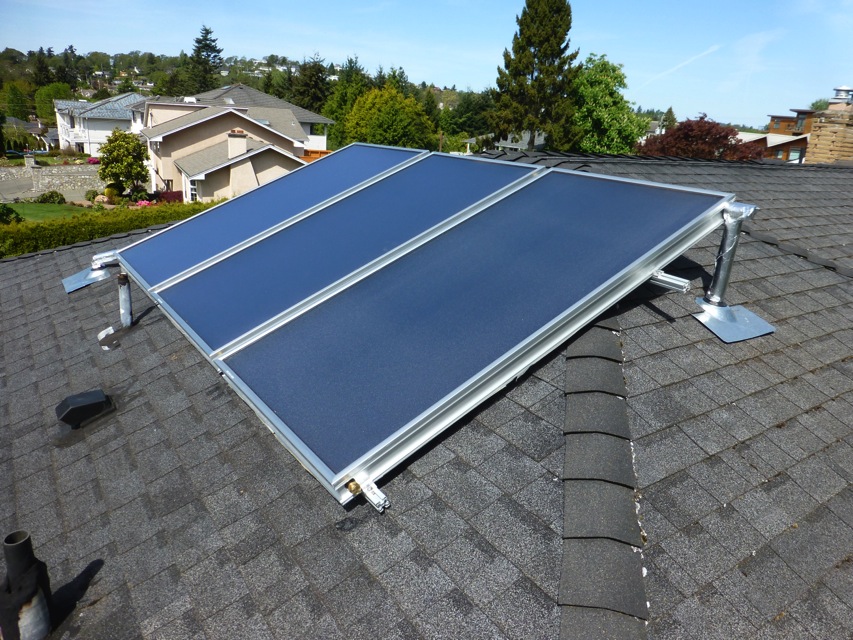
The absorber is the heart of a flat plate collector and the part buyers know least about. This guide sets out what to specify and ask for when you buy absorber plates for your own collector line, so that quotations from different suppliers can be compared on the same terms.
Short answer: To buy solar absorber plates, specify seven things: the coating (black or blue selective), measured absorptance and emittance with the test method, the fin material (aluminium or copper), the tube layout and welding method, the size and header details, the batch test records, and the packing method. Ask each supplier to quote the same written specification and send samples before you commit to volume.
Key Takeaways
- Compare absorbers on measured optical values and test conditions, not on adjectives such as “high performance”.
- Choose black or blue coating by cost and climate; both can be supplied with the same fin and tube options.
- The weld joint and the tube-to-fin bond decide long-term heat transfer and leak risk, so ask how they are made and checked.
- Batch coating tests, packing and sample approval protect an assembly line from variable absorbers.
What Does an Absorber Plate Do in a Flat Plate Collector?
The absorber plate converts sunlight into heat and passes it into the fluid in the tubes, so its coating and its thermal bond to the tubes set the collector’s efficiency. Light passes through the glass, the selective coating absorbs it, and the fin conducts the heat to copper or aluminium tubes carrying water or antifreeze.
A selective coating has two jobs: absorb as much sunlight as possible (high absorptance) and lose as little heat as possible by radiation (low emittance). Buyers should therefore ask for both values, together with the method and conditions used to measure them.
An absorber also has to survive heat. The standard ISO 22975-3:2014 on absorber surface durability assesses the long-term behaviour and service life of selective absorbers in vented flat plate collectors, and defines failure as a change in optical performance, meaning solar absorptance and thermal emittance. Its tests address high temperature, water condensation on the absorber and high humidity with sulfur dioxide.
Should You Specify a Black or a Blue Selective Coating?
Specify black selective coating where cost matters most, and blue selective coating for premium products or weaker solar radiation, since the two are usually sold at different price points. Millionsun’s black coating absorber is positioned as the more cost-effective choice, while the blue coating absorber is positioned for premium markets and for areas with weak solar radiation.
| Question | Black selective coating | Blue selective coating |
|---|---|---|
| Positioning | More cost-effective choice | Premium products; weaker-radiation regions |
| Absorptance (Millionsun) | 95% ±2% | 95% ±2% |
| Emittance | Ask for the measured value and method in the quotation | Ask for the measured value and method in the quotation |
| Appearance | Dark grey to black | Dark blue; a visible product difference for the brand |
| Best fit | Price-led distributors and projects | Premium brands and cooler or cloudier climates |
Emittance is the number that separates good selective coatings from average ones, and a supplier should give it as a value with a tolerance. Do not accept a single “high efficiency” statement without a figure and its test method. Where two supplier datasheets show different values, ask which temperature and which instrument were used.
See Millionsun’s black coating absorber and blue selective coating absorber pages for the product descriptions.

Aluminium or Copper Fin: Which Should You Choose?
Choose an aluminium sheet absorber for lower cost and weight, and a copper fin where a customer or a market expects copper. Millionsun offers both a copper fin and an aluminium sheet absorber on its black and blue coating plates.
- Aluminium sheet: lighter and lower in cost, with good heat spreading when the weld to the tube is sound.
- Copper fin: higher conductivity and a long track record, at a higher material cost and weight.
- Tubes: copper tubes are the norm; ask for the diameter, wall thickness and header size.
- Galvanic risk: check how aluminium and copper are joined, since mixed metals in a wet circuit need a sound joint and suitable water or glycol chemistry.
How Are Absorber Tubes Joined to the Fin, and Why Does It Matter?
The tube-to-fin joint controls how well heat leaves the fin and how reliably the plate stays tight, so ask which method is used and how each joint is checked. Millionsun uses back-side ultrasonic welding or laser welding to join the tubes to the sheet, and silver-copper welding for the pipe-to-pipe joints, on its black and blue coating absorbers.
- Ultrasonic welding: a continuous solid-state bond between tube and sheet, made on the back side, so the coated front surface stays intact.
- Laser welding: a precise, fast joint that suits high-volume lines when the process is well controlled.
- Brazed or silver-copper joints: used for header and riser connections; ask for a leak test on every plate.
- Inspection: ask how often weld strength and leak tightness are tested, and what the rejection rate is.
What Should Be in an Absorber Specification?
A complete absorber specification states the coating, optical values, material, tube layout, dimensions and test records, so two suppliers quote the same product. Use this table as your template:
| Specification item | What to state |
|---|---|
| Coating type | Black or blue selective coating; coating process (roll, spray or sputtered, as the supplier describes it) |
| Optical values | Absorptance and emittance with tolerance, test method and test temperature |
| Durability | Evidence of testing against ISO 22975-3 or equivalent, and stagnation temperature behaviour |
| Fin material | Aluminium sheet or copper fin; thickness |
| Tubes and headers | Material, diameter, wall thickness, number of risers, header size and length |
| Joint method | Ultrasonic, laser or other; leak test on every plate |
| Dimensions | Length, width, tolerance and flatness; custom sizes if required |
| Test records | Batch coating test, weld and leak test records, traceable by batch |
| Packing | Protective film, interleaving, crate or pallet design for sea freight |
| Sample | Quantity, lead time and whether the cost is credited to the first order |
How Should You Test and Accept Absorber Plates?
Accept absorber plates by sample first, then by batch, using dimensional checks, a leak test, a visual coating check and a review of the supplier’s batch records. Millionsun tests every batch of absorber sheets for coating performance before shipment.
- Review the sample against the specification: dimensions, tube layout, weld appearance and coating uniformity.
- Pressure and leak test: test at least one plate to your own procedure and above the working pressure of your collector.
- Optical check: if you have access to a lab, have absorptance and emittance verified independently on a sample.
- Mock-up in a collector: build one collector from the sample and run your final tests, including pressure and fit.
- Batch inspection: on each delivery, check a sample for damage, coating defects and size, and keep the batch records.
If your collector is to be certified, the absorber is part of the product that is tested. The IEA SHC guide to ISO 9806:2017 lists the durability tests a collector must pass, including exposure, stagnation temperature determination, thermal shock, freeze resistance and internal pressure, so keep the absorber specification fixed once the collector is tested.

Should You Buy Absorbers Only, or a Full CKD Kit?
Buy absorbers only when you already source frame, glass and insulation locally, and buy a CKD kit when you want one supplier to match all parts to the absorber. Absorbers alone suit assemblers with a local supply chain; kits suit new lines that want a tested bill of materials.
Millionsun supplies absorbers in custom sizes, as separate components, as part of a CKD or SKD kit, or inside complete collectors. Our guides to CKD, SKD and complete collectors and to a solar collector assembly plant explain how to choose the route.
How Millionsun Supplies Absorber Plates
Millionsun is a source factory in Dongguan, Guangdong, producing flat plate collectors and absorbers since 2006 on an 8,000 m² site with more than 80 employees and 6 automated production lines. Absorbers are coated on Millionsun’s own in-house coating line and welded on 2 ultrasonic lines and 1 laser line, with collector capacity of 20,000 m² per month.
The absorber range includes black and blue selective coating plates with copper fin or aluminium sheet options in custom sizes, plus black anodized strip absorbers and heat pipe absorbers. Every batch of absorber sheets is tested for coating performance before shipment. Samples start at 1–2 units, and we reply within 24 hours. See our page for local collector manufacturers for supply terms.
Need absorber plates for your collector line?
Millionsun is a source factory in Dongguan, China, producing flat plate collectors, absorbers, solar water tanks and system accessories since 2006. We supply complete units, SKD, CKD or components, with OEM and ODM options for coating colour, size and technical documentation. Send your absorber specification and target volume and we will reply within 24 hours.
Request a QuoteFrequently Asked Questions
What should I ask a solar absorber plate supplier?
Ask a solar absorber plate supplier for the coating type, measured absorptance and emittance with the test method, fin and tube materials, weld method, dimensions, batch test records and packing method. Request a sample and compare all quotations against the same written specification.
Is a blue or black absorber coating better?
Neither coating is better in every case: black is the more cost-effective choice, and blue is positioned for premium products and weaker solar radiation. Compare the measured absorptance and emittance on the datasheets rather than the colour.
What is ISO 22975-3?
ISO 22975-3:2014 is the international standard for absorber surface durability, which assesses the long-term behaviour of selective absorbers in vented flat plate collectors. It defines failure as a change in solar absorptance or thermal emittance, and tests high temperature, condensation and humidity with sulfur dioxide.
Can I buy absorber plates from China and build collectors in my own factory?
Yes, you can buy absorber plates from China and build collectors in your own factory, and many assemblers do. Specify the coating, fin material, size and test records, order samples first and run incoming checks on every batch.
Should absorbers have aluminium or copper fins?
Absorbers can have aluminium or copper fins, and the choice depends on cost, weight and market expectation. Aluminium sheet is lighter and cheaper, while copper fin has higher conductivity and a long track record, so state your choice in the enquiry.
Bottom Line
- Specify coating, optical values with test method, fin and tube materials, joint method and packing.
- Choose black for cost and blue for premium or weaker-radiation markets, then compare measured values.
- Test a sample plate and a sample collector before volume, and keep the specification fixed once certified.
- Match the buying route (absorbers only or full kit) to your local supply chain.